Something is changing in search and it has been creeping in for a while now, making a lot of website owners both confused and nervous. Pages rank well, impressions go up, and yet clicks no longer follow the way they used to.
That does not always mean your SEO is failing. Search has simply been moving in this direction, with Google answering more questions directly on the results page. So before you panic over the missing clicks, let’s look at what’s actually happening.
Zero Click Searches: What’s Happening?
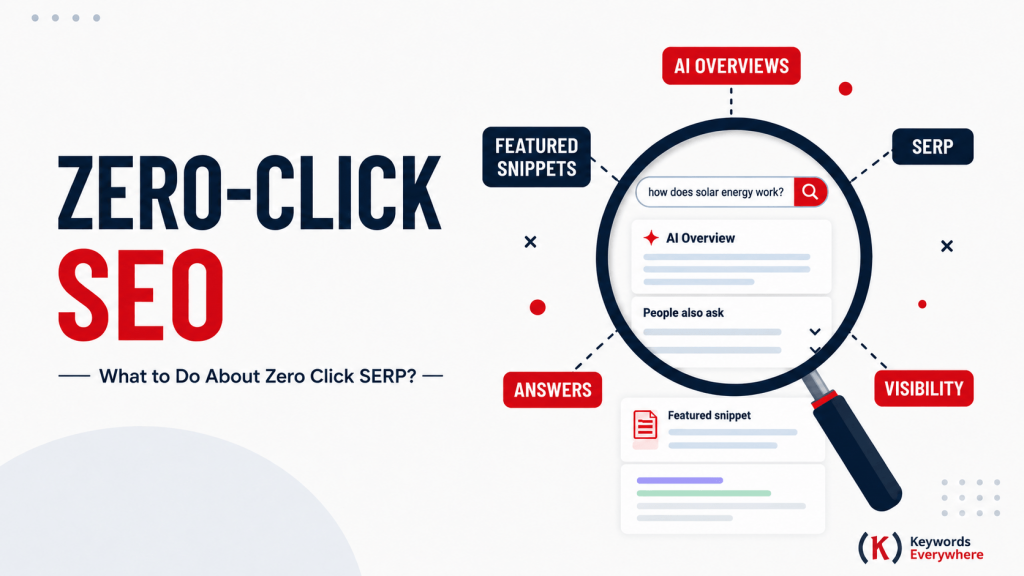
A zero-click search happens when someone searches on Google, gets the answer directly on the search results page, and leaves without clicking through to a website. That answer might come from a featured snippet, People Also Ask box, knowledge panel, local pack, AI Overview, or another SERP feature.
And this is not a tiny shift anymore. SparkToro and Datos found that 58.5% of Google searches in the U.S. and 59.7% in the E.U. ended without a click in 2024. In other words, for a huge share of searches, the user’s journey starts and ends on Google.
That is why some website owners are seeing a confusing pattern: rankings look good, impressions are growing, but traffic is not rising at the same pace. The content may still be visible, but Google is doing more of the answering before the user ever reaches the site.
AI is one of the biggest forces behind this shift. Bain & Company reported that 80% of consumers now rely on AI-written or zero-click-style results for at least 40% of their searches, and this behavior may reduce organic web traffic by 15% to 25%. Semrush data also found that Google AI Overviews appeared in roughly 16% of U.S. desktop searches in November 2025, up from 6.49% in January 2025.
So the challenge is clear: SEO is no longer just about ranking on page one and waiting for clicks. A page can rank, get seen, and still lose traffic because the SERP itself is giving users enough information to move on.
How Zero Click Landscape Came About
Zero-click search is not a brand-new problem. It’s the result of a long shift in how Google presents information.
In the early days, Google worked more like a gateway. People searched, scanned the blue links, clicked a result, and landed on a website. But over time, Google started giving more answers directly on the results page. Featured snippets were one of the biggest turning points. That “position zero” spot gave users quick definitions, steps, lists, and comparisons before they even clicked.
At first, that still felt like a win for SEO. Your site could sit above the regular results, earn visibility, and often get clicks from people who wanted more detail. But it also trained users to expect instant answers from Google itself.
Other SERP features also crowded the search results: People Also Ask boxes, knowledge panels, local packs, calculators, weather boxes, shopping results, and more. Mobile and voice search pushed this even further because users wanted fast answers instead of a long list of pages to open.
Now, AI Overviews have made the shift even bigger. Instead of pulling one answer from one page, Google can summarize information from different sources and present it in a more complete response. So the SERP is no longer just a doorway to websites. It has become the place where many searches begin and end.
So zero-click SEO is not some sudden disruption. It’s the result of years of Google making search faster, more visual, more interactive, and more answer-focused.
What to Do About Zero Click SERP?
The way to handle zero-click SERPs is not to fight the shift. It’s to adjust around it.
The old playbook was simple: rank high, get the click, bring people to your site. But now, your content also has to perform inside the search results themselves. It needs to be clear enough for Google to pull into featured snippets, People Also Ask boxes, AI Overviews, and other SERP features, while still giving users a reason to click when they want the full answer.
Your content now has to work in two contexts: as a strong standalone resource on your website, and as source material for search engines and AI systems. That means the goal is not just to “get traffic.” It’s to show up exactly where users are already getting answers.
So, how do you do this? Here’s how to start making zero-click SERPs work in your favor:
1. Target the Right Keywords
In a zero-click SERP, keyword choice matters even more.
Some searches are too simple to turn into meaningful traffic. Think basic definitions, quick facts, calculators, weather updates, and broad informational queries. Google can usually answer these right on the SERP, so even if your page ranks, the user may not need to click.
The better move is to focus on keywords with stronger intent. Go after comparison searches, problem-aware questions, product research queries, local searches, and long-tail keywords where users need more than a quick answer.
Also Read: Keyword Research for Beginners: Step-by-Step Guide
2. Avoid Keywords That Won’t Deliver Business Value
Besides targeting stronger-intent keywords, you need to filter out the ones that will not do much for your business.
Some keywords are topically related, but still weak from a business standpoint. They may attract people who only want a quick answer, not a deeper guide, product, service, or solution. In a zero-click SERP, those keywords can eat up time without giving much back.
A simple test helps: if you win this keyword, what happens next? If the answer is “not much,” skip it.
3. Optimize for AI Crawlability
A big part of adapting to zero-click search is understanding Generative Engine Optimization, or GEO. Some people also call it AI SEO, LLM SEO, AI visibility optimization, or answer engine optimization. Whatever term you use, the goal is pretty straightforward: make your content easier for AI-powered search systems to find, understand, summarize, and cite.
AI search does not behave exactly like traditional search. Instead of only listing pages, it can summarize answers, compare sources, and cite websites directly in the SERP or inside AI tools. That means your content has to be written and structured in a way that makes it easy to crawl, easy to understand, and easy to quote or reference.
Start with the basics: clear headings, concise explanations, direct answers, FAQ-style sections, and organized formatting. Avoid hiding your strongest information in PDFs, gated assets, or messy page layouts. If you want AI systems to use your content, give them a clean, crawlable version to work with.
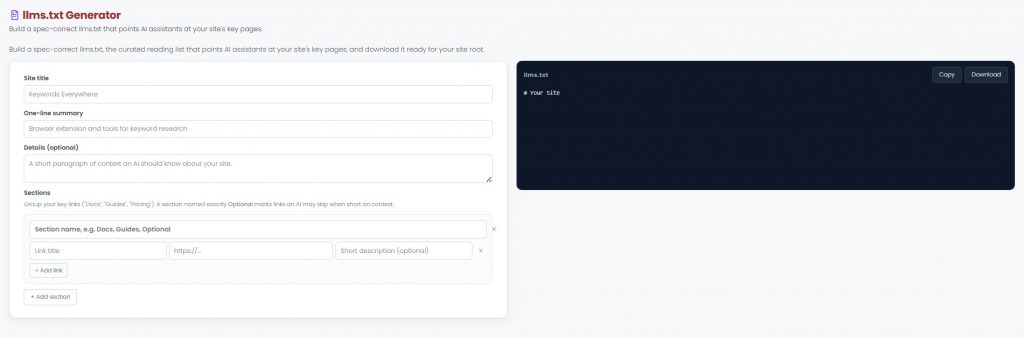
You can also support this with our llms.txt Generator, which helps you create a spec-correct llms.txt file pointing AI assistants to your site’s key pages. This gives AI systems a cleaner map of your most important resources, so pages like guides, docs, product information, or pricing pages are easier to discover and understand.


Also Read: Generative Engine Optimization (GEO): Guide & Strategy
4. Give the Quick Answer, Then Add the Deeper Value
The goal is to be easy to extract but not easy to replace. Zero-click results usually reward content that’s clear, direct, and easy to summarize. That means you should not bury the answer under a long intro or vague explanation. Put the main answer where search engines and users can find it quickly.
But make sure to give people a reason to keep going. After the quick answer add the deeper layer. Include examples, screenshots, workflows, templates, checklists, comparison tables, tools, expert notes, use cases, or original data. These give your content more staying power and help your page offer something the SERP cannot fully capture.
5. Optimize Existing Content with Schema Markup
Schema markup gives Google more context about your page. It’s like putting clear labels on your content so search engines know if they’re looking at an FAQ, article, product page, review, how-to guide, local business page, event page, or another type of content.
It will not magically guarantee a rich result, but it can make your content easier to understand and more eligible for certain SERP features. So if you already have good pages sitting on your site, schema can give them a better shot at zero-click visibility.
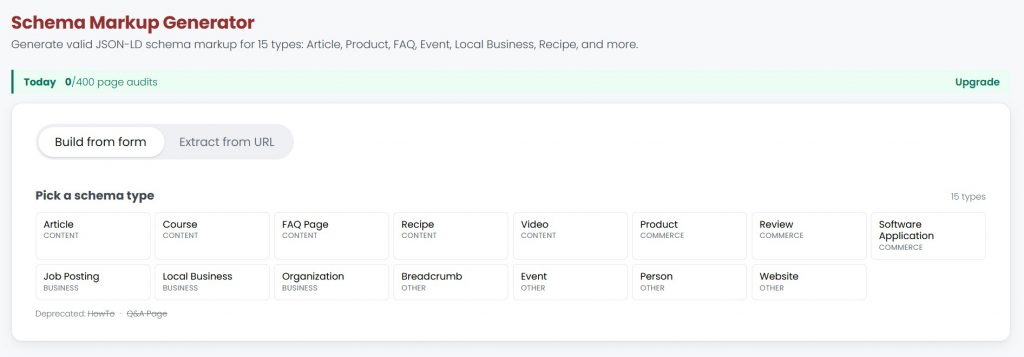
Tools like our free Schema Markup Generator can simplify the process by generating valid JSON-LD for common schema types such as Articles, Products, FAQs, Reviews, Breadcrumbs, Local Businesses, and Events in just a few clicks.
You can also use our free Schema Markup Validator to review your structured data after adding it. The tool checks your JSON-LD field by field, helping you spot missing required or recommended properties.
6. Strengthen Your Local SEO Presence
Local searches play by slightly different rules.
When someone searches for a nearby service or business, Google often gives them everything they need right on the results page: map listings, reviews, hours, phone numbers, photos, and directions. So even if they do not visit your site, they can still become a lead.
That makes your Google Business Profile an even bigger deal. It’s often the first place people turn to when checking whether your business looks active, trustworthy, and worth contacting.
Keep it updated with accurate hours, services, categories, contact details, fresh photos, and strong reviews. Local packs and map results can still bring customers your way, even without the traditional website click.
For a clearer local view, run your target keywords through our Free SERP Checker and filter by country, state, or city. Since it shows location-specific SERPs, including the local map pack, you can see the real local competitors you’re up against for any given location.
Also Read: Local SEO: The Ultimate Guide to Ranking in 2026
7. Measure More Than Clicks
In zero-click SEO, organic traffic is still important, but it’s not the prime scoreboard anymore.
Your page might rank well, earn more impressions, and still bring in fewer clicks than expected. That can be frustrating, but it doesn’t really mean the work is wasted. Sometimes, your brand is gaining visibility directly on the SERP before the user ever lands on your site. That’s still a win because being seen in the right place can still shape trust, recall, and future demand.
That’s why your reporting needs to include more than clicks and sessions. Watch for featured snippets, PAA placements, AI Overview mentions, branded search growth, local pack visibility, profile actions, calls, direction requests, assisted conversions, and topic-level impressions.
Because the next big question is not only, “Did they click?” It’s also, “Did they see us, trust us, and remember us?”
8. Use SEO Insights Across Other Channels
If zero-click search is limiting traffic, make the content pull its weight elsewhere. Turn strong answers into social posts. Share your best guides with email subscribers. Use high-intent search insights to shape paid campaigns. Repurpose comparison content into landing pages, ads, and sales materials.
The goal is not to fight AI or the SERP. It’s to make your content work harder everywhere your audience spends time.
Also Read: Content Marketing 101: Strategy & Examples
9. Rethink What SEO Success Looks Like
The old SEO goal was simple: rank, get clicks, grow traffic.
Those metrics still count, but they’re no longer the full measure of success. In a zero-click landscape, your brand can gain value by being cited in AI answers, appearing in SERP features, showing up for important questions, and becoming associated with the topics you want to own.
So instead of only chasing traffic, think in terms of presence. Are you showing up in the SERP features that matter? Are users seeing your brand around high-value questions? Are AI systems and search engines connecting your site with the right topics?
That is the new mindset. And like it or not, your KPIs ought to reflect where search is headed. Here is another perspective: SEO doesn’t need more clicks. It needs more visibility in the places where decisions are actually being made.
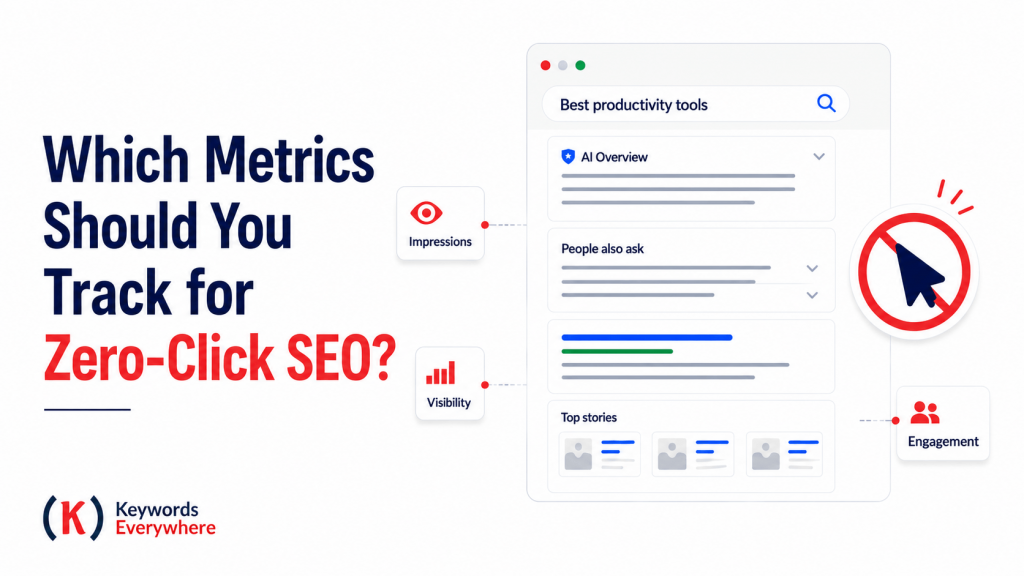
Which Metrics Should You Track for Zero-Click SEO?
Zero-click search does not make measurement impossible. It just means the metrics have to catch up. Instead of only asking how many people clicked, you also need to pay attention to what happens around the click.
Here are the key metrics to watch:
1. AI Visibility Score
AI Visibility Score measures how often your brand appears in AI-generated answers across platforms like Google AI Overviews, ChatGPT, Perplexity, Gemini, and other AI search tools.
The goal is to track your share of AI visibility over time. Look at how many relevant prompts mention your brand, how often your competitors appear instead, which topics trigger citations, and whether those mentions are accurate. This gives you a clearer view of whether your content is gaining ground in AI-powered search.
To measure it for free, start with a fixed list of prompts tied to your core topics, products, and buyer questions, then check which brands appear across AI platforms each month. There are also tools like Peec AI, Profound, and Otterly AI that can help track AI mentions, citations, sentiment, and competitor visibility. The main thing is consistency: use the same prompts, same platforms, and same competitors so you can see whether your AI visibility is actually improving over time.
2. SERP Feature Share
Another useful metric to watch is how often your brand appears in SERP features for your priority keywords.
This includes placements in featured snippets, People Also Ask results, knowledge panels, local packs, image packs, and AI Overviews.
To measure it, track a fixed list of target keywords each month and note which SERP features appear, which ones include your site, and which ones competitors own. Tools like Semrush Position Tracking, Ahrefs Rank Tracker, SE Ranking, and AccuRanker can help monitor SERP features, competitor visibility, locations, and device-level changes over time.
Semrush’s Position Tracking includes SERP feature reporting, Ahrefs has SERP feature filters in Rank Tracker, SE Ranking monitors 35+ SERP features, including AI Overviews, and AccuRanker offers SERP analysis for tracking changing SERP features. This helps you see how much visibility your brand is earning across the full SERP.
3. Brand Mentions and Sentiment
In zero-click search, users may see your brand in an AI answer, review summary, SERP feature, or third-party article without visiting your site. But do not count every mention as a win. The question is not only, “Did we get mentioned?” It is, “Did that mention help or hurt us?” Look at the quality of each mention. Was your brand described clearly? Was the information accurate? Was the tone positive, neutral, or negative? A good mention can support trust. A bad one can hurt trust before you even get a chance to set the record straight.
Bad mentions can happen when search engines and AI tools pull from outdated content, negative reviews, weak listings, or old third-party pages. Reputation management helps, but it should not stop at patching things up.
The better long-term move is to become the kind of brand that naturally earns good sentiment. Keep your profiles fresh, address customer concerns, pay attention to what your audience is saying, and improve your product or service based on real feedback. The stronger your reputation across the web, the better your brand looks when search engines and AI tools do the talking.
4. Branded Search Volume
Monitor branded search volume because it shows whether people actually remember you after seeing you in search. In a zero-click journey, users may not visit your site the first time. They might spot your brand in an AI answer, snippet, review result, or local pack, then look you up later when they’re ready.
That makes branded search a useful signal for recall, interest, and growing demand.
5. Question Coverage Rate
Beyond tracking rankings, pay attention to how often your brand appears for key audience questions.
If your brand keeps showing up for the questions your audience asks before buying, comparing, or solving a problem, you’re already on your way to building a stronger presence in the search journey.
Track common questions around your product, service, category, and pain points. Then check whether your content appears in featured snippets, People Also Ask boxes, AI Overviews, or other answer-led placements.
You can automate some of this today with tools like Semrush, Ahrefs, SE Ranking, and AccuRanker for SERP feature tracking, plus Profound, Peec AI, or Otterly AI for AI visibility. Just keep in mind that AI answers are still fluid, and results can vary by prompt wording, location, device, and timing. AI search tracking tools are still generally at their infancy, so treat whatever data you gather as directional and something to validate alongside other SEO signals.
6. Multi-Platform Visibility
Your audience is no longer searching in one straight line. They might Google a question, watch a YouTube review, check Reddit for honest opinions, search TikTok for recommendations, or ask ChatGPT and Perplexity for a quick breakdown. That means traditional rankings are no longer the be-all and end-all .
Instead of measuring visibility in one place, look at the full path people take before they trust a brand. The more often you show up across those touchpoints, the more visible your brand becomes across the full research journey.
7. Impression Share and Search Visibility
Clicks are not the only sign that your SEO is doing something.
In zero-click search, impressions can rise while traffic stays flat. That may mean your content is appearing more often, but the SERP is answering enough of the query before users even get to click.
Track impression trends by keyword, page, topic cluster, and SERP feature. This helps you see which topics are getting more search exposure and which pages may need stronger hooks to pull users in.
8. Assisted Conversions
Another useful thing to watch is whether zero-click visibility appears to support later conversions.
Someone may first see your brand in an AI answer, featured snippet, local pack, or People Also Ask result without clicking. Later, they might search your brand, visit directly, call, book, submit a form, or make a purchase.
To track this, compare visibility gains against later behavior in tools like Google Search Console, Google Analytics 4, Google Business Profile, and your CRM and email marketing tools. Look for patterns such as branded search growth, direct traffic increases, more returning users, higher form fills, more calls, more bookings, or demo requests after your brand starts appearing more often in key SERP or AI results.
It’s not perfect attribution, but it helps you see whether zero-click visibility is actually helping move people toward action.
9. Engagement and Lead Quality
Fewer clicks can still be good news if the right people are clicking.
Zero-click results often filter out users who only need a quick answer. So when someone does visit your site, they may already be more engaged and more ready to compare, evaluate, or act.
That is why lead quality matters alongside traffic. Watch metrics like engagement rate, scroll depth, time on page, pages per session, form fills, demo requests, sales-qualified leads, and organic conversion rate to see whether your organic traffic is getting stronger, not just bigger.
Zero-click search does not make SEO harder to measure. It just makes the measurement much broader. Clicks and rankings still matter, but they need more context. When you track visibility, engagement, brand demand, and business impact together, you get a clearer view of how your SEO efforts are working as a whole.
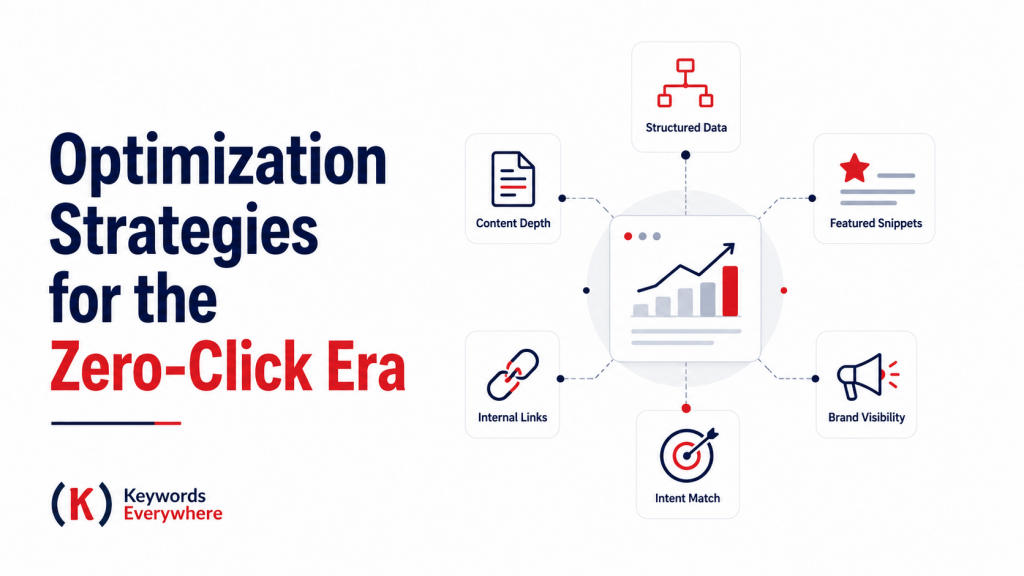
Optimization Strategies for the Zero-Click Era
Zero-click search calls for a different kind of optimization. You still want to improve SEO rankings and clicks, but you also need content that can be surfaced in snippets, cited in AI answers, and trusted before users ever land on your site.
Here’s how to make it work:
1. Build Topical Authority in Answer Engines
Search is becoming more answer-led, which means your content has to prove authority beyond one ranking page.
When AI systems and search engines summarize information, they need sources that show depth, consistency, and credibility across related queries. A single shallow article will not do much. A connected group of useful pages can.
So build around the full topic: definitions, questions, examples, comparisons, use cases, objections, and next steps. The more complete your coverage is, the easier it is for your brand to be seen as a trusted source.
Also Read: Topic Clusters for SEO (Strategy + Examples)
2. Keep Your Content Fresh
Content freshness is one of the easiest ways to keep important pages competitive.
Search behavior changes, tools change, stats change, and even the way Google displays answers can change. If your content does not keep up, search engines and AI systems may start favoring pages that feel more current.
You do not have to rebuild your content from scratch. Start with small but meaningful updates: replace old data, refresh screenshots, improve examples, add missing questions, and tighten sections that feel outdated.
For your most valuable pages, set a regular review schedule. Quarterly is a good baseline, especially for pages targeting AI Overviews, featured snippets, competitive keywords, or high-intent searches.
Also Read: Content Refresh 101: What to Update (and Why It Works)
3. Optimize Entities and Brand Signals
In SEO, entities are recognizable things search engines can understand, like your brand, products, authors, locations, services, and core topics. Brand signals are the clues that help search engines verify and connect those entities across the web, such as your website, profiles, listings, reviews, schema, backlinks, and third-party mentions.
For zero-click SEO, these web-wide signals become especially useful because search engines and AI systems pull from more than one source. They look at your wider brand footprint to understand whether your business is legitimate, consistent, and relevant to the topic.
So make sure your brand information is accurate across your site, profiles, directories, review platforms, marketplaces, and trusted mentions. Use schema where it helps, especially Organization, LocalBusiness, Person, Author, Product, and SameAs schema.
The less confusion there is around your brand, the easier it is for search engines and AI tools to understand, trust, and surface you.
4. Create Content That Matches How People Ask Questions
Search is getting more conversational, and your content should keep up.
With AI search and voice assistants, people are no longer typing short, clipped keywords but asking full, natural questions like, “What is the best way to track marketing attribution?” or “Who offers emergency plumbing near me?”
Thus, you should use conversational headings, FAQ-style sections, direct answers, and long-tail phrases that sound closer to how people actually speak. Just keep it useful, instead of forced. The point is to answer the questions that come up before someone makes a decision or takes the next step.
Adding FAQ sections is one of the easiest ways to match conversational search intent. If you’re looking for question ideas, our free FAQ Generator can pull common queries related to your topic and help you build FAQ sections around them.
5. Structure Content for Featured Snippets and PAA
If you want to show up in featured snippets or People Also Ask results, make your content easy to extract.
Do not bury the main point under a long intro. Answer the question early, then format the rest of the section in a way that is easy to scan: short paragraphs, lists, steps, tables, and simple definitions.
Once the quick answer is covered, expand with examples, tools, use cases, and deeper value they cannot fully get from the SERP.
6. Create High-Value Visual and Interactive Content
Basic answers are easy for Google and AI tools to summarize. Useful experiences are much harder to replace.
That’s why visual and interactive content can be so valuable in zero-click SEO. Think videos, infographics, calculators, templates, checklists, quizzes, assessments, comparison tools, and step-by-step interactive guides.
These assets create a stronger pull because they offer practical value. A SERP summary can explain the idea, but it cannot deliver the full template, run the calculation, show the complete video, or walk someone through the process in detail.
To help these assets get discovered, optimize them properly. Add descriptive file names, alt text, captions, transcripts, keyword-friendly video titles, YouTube descriptions, and structured metadata where relevant.
7. Build Brand Authority Across Channels
In a zero-click world, brand recall matters more than ever. Someone may see your brand in an AI answer and move on without clicking. But that first impression can still help. If they later see your ad, review, LinkedIn post, YouTube video, or newsletter, your brand no longer feels random.
That’s why SEO should feed your wider marketing. Turn high-performing search topics into social posts, videos, emails, sales materials, paid campaigns, and community discussions.
And if you want to repurpose those ideas faster, our Social Media Post Generator can help turn them into ready-to-publish posts for Instagram, Facebook, LinkedIn, and X.
Consistency is crucial because when your message keeps showing up in different places, you build recognition, and that recall can help turn zero-click visibility into later action.
8. Give People a Reason to Click
A zero-click result can answer the surface-level question, but your page should own the deeper experience.
That means going beyond the quick answer. Add resources users actually want to use: templates, tools, calculators, case studies, original data, expert insights, comparison tables, examples, and step-by-step workflows.
But make that value obvious before the click. If your title, meta description, or snippet only repeats the same basic answer Google already showed, why would anyone open the page? Use your SEO title and meta description to tease what the SERP cannot fully provide: the template, the checklist, the comparison, the real examples, or the step-by-step process inside.
If you need help crafting that message, our free Description Generator can create a meta description in your preferred tone and let you regenerate as many times as you like until you find one that feels right.
The thing is, search visibility only opens the door. A stronger appeal and promise is what earns the click. Just avoid turning it into clickbait. Your snippet should create interest, but the page still has to back it up.
9. Keep Testing and Adapting
Zero-click search is still a moving target. AI answers shift, snippets change, PAA questions rotate, and local results can look different from one search to the next. So treat your strategy as a living system. instead of a one-time checklist.
Make sure to monitor, test, improve, and repeat. Start by watching the signals that show whether your content is still gaining visibility. Are impressions rising? Are clicks softening? Are your pages appearing in featured snippets, PAA boxes, AI Overviews, or local results? Are branded searches growing after your visibility improves?
Then look at the page itself. Small issues can sometimes hold content back, especially when search engines need clean signals to understand and display it properly. Running key URLs through an SEO Analyzer or SEO Optimizer can help uncover opportunities and fixes that support better visibility across search and social surfaces.
In the zero-click era, the brands that keep testing are usually the ones that keep showing up.
FAQs
• Can you still drive traffic to your site with zero-click searches?
Yes. The SERP may answer the quick questions, but users still visit pages that offer the full experience. Strong titles, helpful meta descriptions, original insights, examples, and practical resources can still pull people in.
• Should businesses still invest in SEO despite the zero-click landscape?
Yes. Businesses should still invest in SEO, but with an updated strategy. Zero-click search reduces some clicks, but SEO still builds visibility, trust, authority, and brand recognition across search results, AI answers, local packs, snippets, and future buying journeys.
• What content formats tend to perform best for zero-click visibility?
The best formats are easy to extract and easy to scan. Think direct answers, bullet lists, step-by-step guides, comparison tables, FAQ sections, videos, visuals, and concise summaries that match how people ask questions.
• Can you rank in AI Overviews with the same tactics that work for featured snippets?
Some tactics overlap, but AI Overviews need more than snippet formatting. Clear answers help, but you also need topical depth, fresh information, strong entity signals, original insights, and credible mentions across the web.
• How do I optimize for ChatGPT, Perplexity, Claude, and other LLMs?
Make your content clear, crawlable, and credible. Build topical authority, publish original insights, use expert input, keep brand details consistent, and earn mentions from trusted sources so LLMs have stronger signals to work with.
• Do LLMs use the same sources as Google?
Not always. Google, ChatGPT, Perplexity, Claude, and other tools may use different indexes, citations, partnerships, browsing systems, or training data. That’s why your brand needs visibility across more than Google alone.
• Do zero-click searches hurt SEO?
They can hurt if you only measure clicks and traffic. But zero-click searches can still build visibility, trust, brand recall, AI citations, and later conversions. In plain terms, SEO is not gone; the scoreboard has just gotten wider.
Embrace the Shift to Zero-Click SEO
Zero-click search can sound like bad news at first. If more users get what they need directly from AI answers, featured snippets, local packs, and other SERP features, it can feel like your site is getting pushed out of the journey. But that is only one side of the shift.
The bigger picture is that search is becoming more answer-led. Users may not always click right away, but they can still see your brand, read your insight, notice your data, or recognize your name inside the answer. That kind of visibility still has value, especially when people are researching, comparing, and building trust before they make the final call.
This is where the mindset needs to change. SEO is no longer just about ranking high, getting the click, and moving users into a funnel. It’s also about becoming the brand that search engines and AI systems trust enough to cite, summarize, and surface. Every mention can act like a brand impression. Even without an immediate visit, your business becomes associated with the topic users care about.
And that recognition can compound. Someone may first see your brand in an AI Overview, then notice you again in a regular search result, a YouTube video, a review, a LinkedIn post, or an ad. By the time they’re ready to click, compare, book, or buy, your name already feels familiar. That is the real opportunity behind zero-click SEO.
You don’t need to fight the future of search. Instead, you ought to adapt to it. Create content that answers clearly, proves authority, includes your brand naturally, and gives users a reason to seek you out when they need more than the quick answer.
Zero-click search is not the end of organic visibility. It is the start of a different kind of visibility, one where being cited, recognized, and remembered can be just as important as winning the click.

