SEO Reports
An SEO report turns raw search data into clear next steps. Instead of staring at a long list of keywords and metrics, you get a plain answer to questions like what your content should cover and how to rank for a search term.
Keywords Everywhere builds these reports with AI. Each one is an SEO analysis done by an LLM, using the keyword and SERP data the extension already shows on Google, so it automates work that would otherwise take you hours.
Looking for a quick SEO report on a specific page instead? Our free SEO Analyzer audits any URL and flags what to fix, right in your browser.
Every time you search on Google, a "Run SEO Reports" widget appears at the top right, as shown below.
This widget lets you run an SEO Report.
There are three buttons, one each for ChatGPT, Claude and Gemini. Every report works with all three.
Pick the report you want, click the button for your preferred LLM, and a new page opens with the finished report.
The rest of this article explains what each report does, and ends with an FAQ in case you run into any issues.
Get User Search Intent
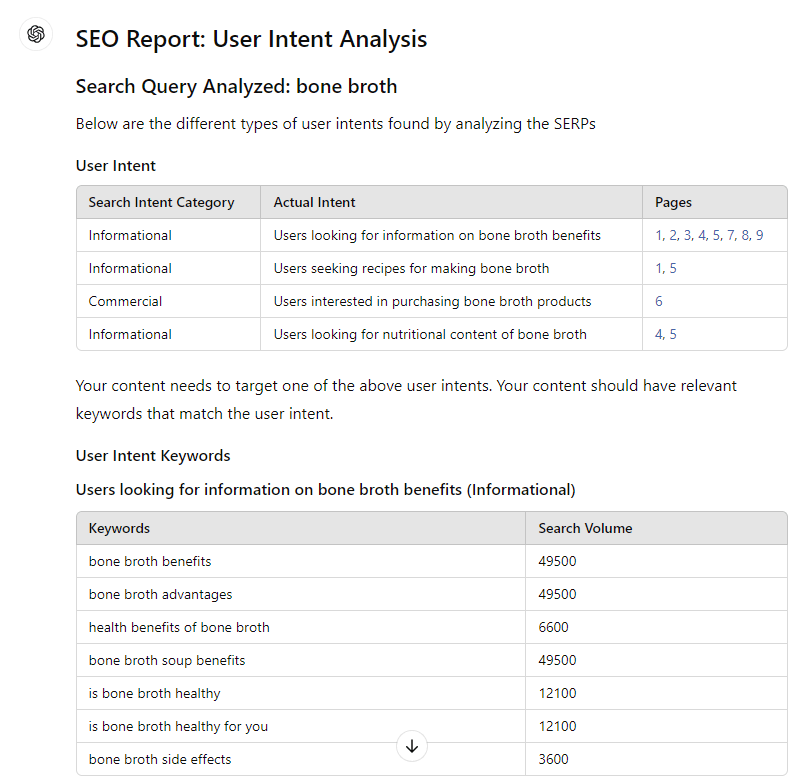
The Get User Search Intent report analyzes every page ranking for your search query, works out the real intent behind each one, then collates them and hands you the keywords your article needs to satisfy that intent.
LLMs are great at reading the meaning behind words, so they can look at the ranking pages and tell what each one is really trying to answer.
In addition to the top-level intent categories (Navigational, Informational, Commercial and Transactional), the report gives you very specific intent, so you know exactly what your content should cover.
Analyze Content Types
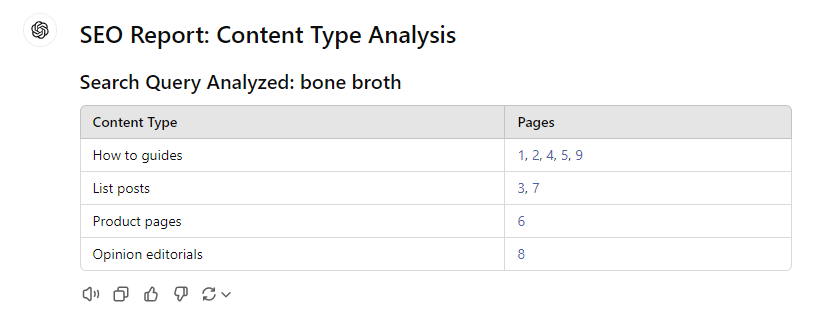
The Analyze Content Types report looks at every page ranking for your search query and works out what kind of content each one is. For example, a page could be a how-to guide, a step-by-step tutorial or a list post. The report then collates the types to show which are most common, so you know what kind of content to create.
Cluster All Keywords
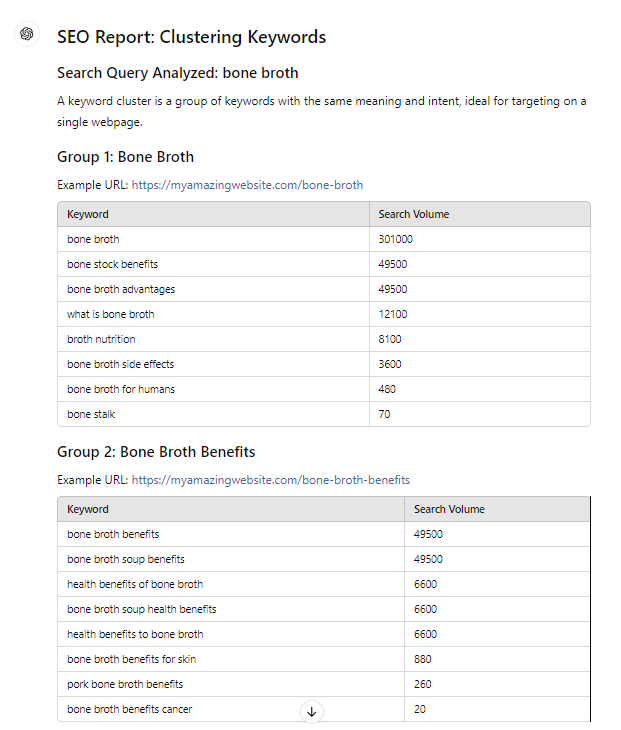
The Cluster All Keywords report groups all the keywords for your search query, so you can see which keywords should be targeting which page.
This is essentially an automated keyword report. It runs on all the keywords shown in the Google SERP widgets, including the Related and People Also Search For keywords, and suggests sample pages along with the keywords each page should target. That makes content planning much easier.
It is worth turning on the search volume in those widgets before you run the report, so the clusters come with the Google search volume next to every keyword.
Analyze Titles for SERP
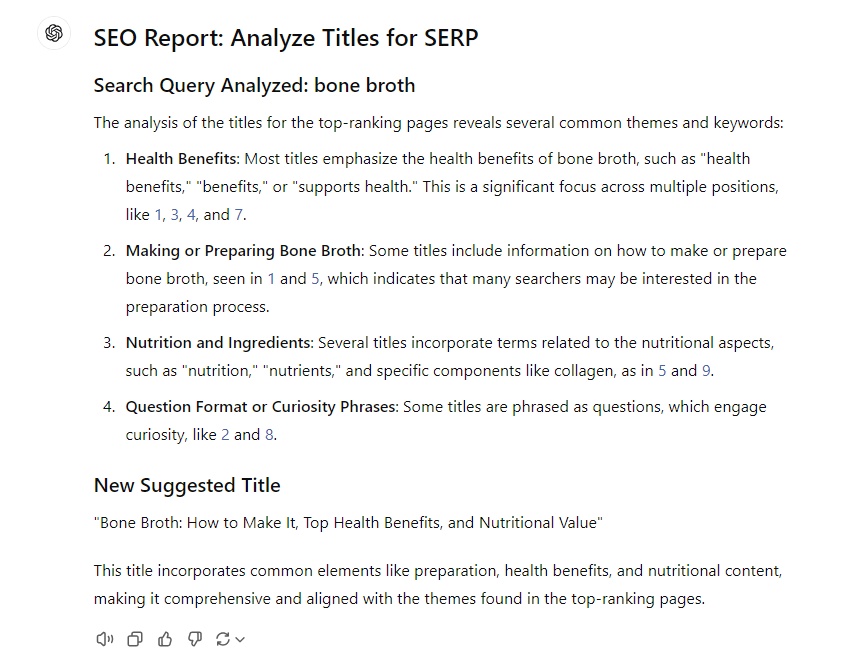
The Analyze Titles for SERP report reads the titles of every page ranking for your search query, finds what they have in common, and suggests a title for your page so it can compete with them.
Check Rankability for SERP
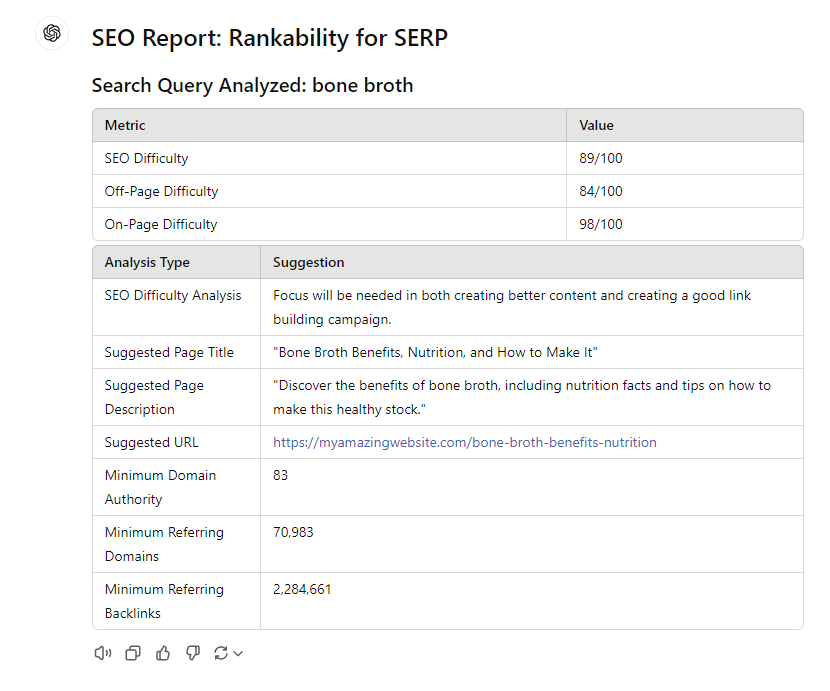
The Check Rankability for SERP report analyzes the results page and the pages ranking on it, then tells you how to rank for that search query.
It reads the SEO difficulty data and suggests the best approach to rank, along with a page title, description and URL.
It also tells you the minimum Domain Authority, referring domains and backlinks you need to reach the first page for that query.
Suggest Anchor Texts
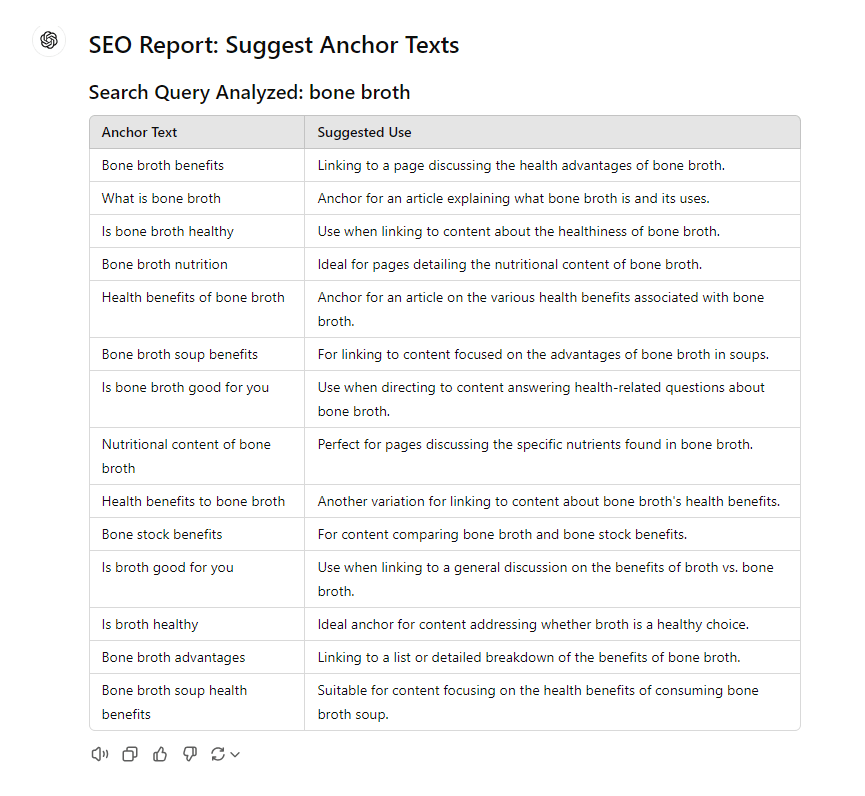
The Suggest Anchor Texts report looks at all the keywords found for your search query and suggests anchor text you can use in your content.
It helps with internal linking by suggesting the best anchor text for the links pointing to your important pages.