

Some webmasters and SEOs, despite their best efforts, still struggle with low search engine visibility, but the good news is that there are strategic ways to increase your SEO rankings quickly and effectively.
To rank on the first page of Google for your target search terms, you need sustained effort and a solid understanding of how search engines work.
How Search Engines Rank Websites
Search engine ranking is a three-step process. You need to make sure that your pages are ready for each phase, or you’ll end up leaving rankings on the table.
1. Crawling (The Discovery Phase)
Before ranking pages, search engines first need to know that they exist. They do that using automated bots called spiders or crawlers. These discovery engines crawl the entire web continuously, either in real time or at a scheduled cadence. Crawl frequency depends on how huge the site is and how often it’s updated. That is why posting consistency and frequency matter as well because the more updated your website is with fresh content, the more crawl budget your site gets.
Since crawling is the literal first step, no matter how awesome your content is, if your pages are not crawlable, you’ll never be able to win rankings and organic traffic. Take note of the following issues that hinder crawling:
- Robots.txt Errors
- Server errors (5xx status codes)
- Broken links
- Redirect chains and loops
- Javascript rendering issues
- Poor site architecture and lots of orphan pages
2. Indexing (The Cataloguing Phase)
Once Google discovers a new page, it will analyze the content to understand meaning and context and to check for quality, relevance, and originality. It then decides whether or not to store it in its huge library or Search Index. Obviously, it will only want to use high-quality content for its database, so if there are issues like low-quality, duplicate, thin, or low-value content among other technical issues, you might end up finding your page under the “Crawled but not indexed” section on Google Search Console.
To confirm if a page is indexed, just inspect it under the Indexing Pages section of GSC. If a lot of your content is not indexed, troubleshoot the problem as early as possible to avoid tanking your content marketing campaign and SEO performance.
Common indexing issues include:
- Technical errors like redirects, http status codes, robots.txt or no index tags
- Content and quality issues like incorrect canonical tags, duplicate content, and poor-quality content
- Site performance gaps like slow loading speed, poor internal linking, AJAX and Javascript challenges, and too many pages wasting crawl budget
You can also use free tools like our Free SEO Analyzer to identify technical, content, performance, and usability issues that may be keeping pages from being indexed, and our SEO Optimizer to help prioritize those issues and guide you through the fixes.
As you optimize your pages and as Google starts indexing them, it will log the keywords found and create associations based on the semantic terms, setting it up for the next stage.
3. Ranking (The Serving Phase)
When users fire certain queries, Google then determines which page is the most relevant based on search intent. Even if your page is indexed, there’s no guarantee it will rank well as it all depends on your competition, content relevance and quality, keyword optimization, domain authority, and other factors like technical SEO and even user experience.
For certain, Google will prioritize ranking the most high-quality, relevant, and useful content for the user’s query. It’s no longer just about keyword frequency or number of backlinks. Google’s ranking algorithm has gone so sophisticated that it can interpret even the most novel and ambiguous queries and still manage to associate them with the best results. You can fixate on the supposed 200 Google ranking factors, or you can just lean into the fact Google has gone really good at identifying and promoting useful, reliable, and user-focused information, filtering out anything low-value at scale.
This then leaves you no other choice but to stop at nothing till you get the full picture of user experience locked down. From content quality to speed to user navigation, every detail counts.
Is it possible to improve seo rankings fast?
Especially if you’re an SEO feeling the pressure to deliver results fast, it could get challenging to manage. Some clients or company leaders don’t fully understand the long-term nature of SEO. Some SEOs are then tempted to pursue vanity metrics instead of actual business value.
The first step of any SEO campaign is to be crystal clear about what SEO success would look like for your business. While ranking and organic SEO traffic would naturally result in more awareness and attention, the big question is, are you getting the most qualified visits? Ranking fast is a good goal, but an even better SEO north star should be qualified leads, reduced customer acquisition costs, and increased brand awareness overall.
You can get there by nailing your buyer persona and targeting only the keywords with actual business potential. For example, if you’re selling ergonomic chairs, you’re better off going after buyer-intent keywords like “ergonomic chair for lower back pain” instead of topics like “how to fix a squeaky chair”. Improving SEO ranking is not just a support-level marketing activity. It’s an actual business function that you can optimize intentionally for faster and scalable results.
SEO is a long-term effort, but some of the fastest ways to improve SEO on your website include:
- Creating relevant content that answers questions for your users
- Optimizing title tags with search terms and create relevant META data for all pages
- Improving content with fresh, relevant copy written toward keyword targets
- Including relevant keyword ALT tags on images
- Interlinking and clustering your content between pages
- Making your site mobile-responsive
- Improving website load speed
- Focusing on search terms with less competition
- Checking and consolidating your root domains
How to Improve SEO Rankings
To build a solid SEO foundation that has real long-term value, you shouldn’t run around chasing hacks. SEO success will naturally come when you set up the basics the right way. After all, the goal is not just to rank fast but to actually hold your position and overall staying power in search engines.
Here are some solid ways on how to improve SEO rankings and get your website to the top of google:
1. Create high-quality, engaging content
Although there are lots of Google ranking factors, quality content is definitely one of the most important factors for improving search engine ranking. In fact, a substantial amount of Google’s work is updating their algorithms to get better and better at identifying and prioritizing high-quality and helpful content. Just as important, it’s also actively trying to weed out anything spammy, unoriginal, or downright low-quality.
If you want Google to love your content, here are some tips that can help boost SEO rankings:
● Focus on user intent
Search intents for broader keywords could be informational, commercial, or transactional. Each represents where users are in the buyer’s journey. You should strive to align your content with what searchers actually want and be as close as you can to what users expect to see.
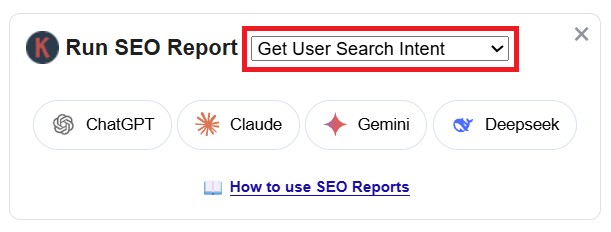
It’s easy to infer search intent at a glance, but you can also validate that information by checking the actual SERP listings for any given query. Looking at what Google is already ranking for your chosen keywords could guide your content production approach. If you have a Keywords Everywhere account, you can automate this process by using the Run SEO Report widget. Just type in your target keyword on Google, select “Get User Search Intent” from the dropdown and then click the LLM of your choice.


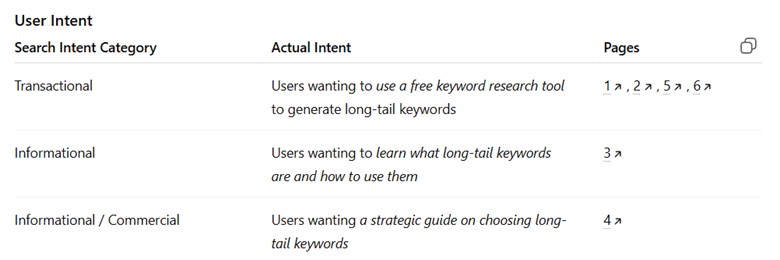
For example, for the query “long-tail keyword research”, if you are to manually infer the search intent, you may have a few doubts about whether the user is looking for tutorial or tools. Our AI analysis takes the guesswork out of the process and lays out the actual search intent of the top listings.
Not only that, it also lists and organizes keywords you can use based on the search intent:
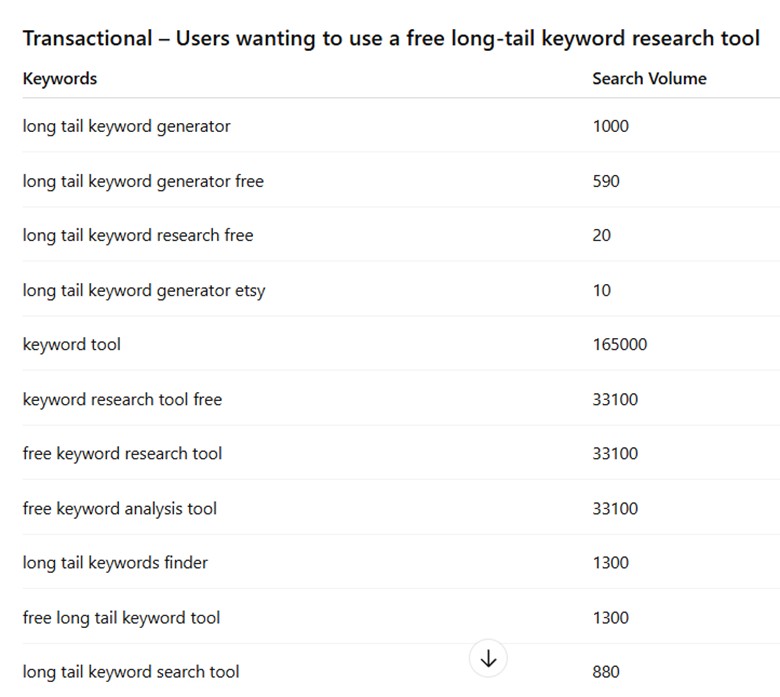
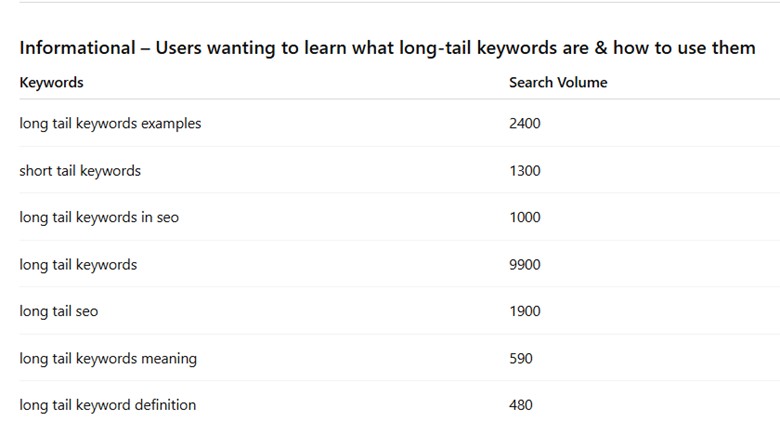
The same widget has many other cool features to guide your keyword research and SERP analysis. To explore the full scope, read our guide on SERP Analysis Through AI SEO Reports. There are many other helpful features like gauging rankability, automatically clustering similar keywords, creating titles and anchor texts, and more.
● Optimize for readability
Even if your content reads so well and is packed with lots of valuable data, if it looks like a giant wall of text, it will still fall short.
Readability in SEO is all about making your content easy for users to understand, follow, and absorb. To do this, use short paragraphs, bullet points, subheadings, and plenty of white space to make your content easy to read and scan. Keep the sentences short and clean, and keep the flow simple and logical. Avoid fluff, get to the point quickly, and make your content generally feel easy on the brain.
When your content reads effortlessly, users would stay longer, sending strong signals that can push your rankings to improve over time.
Our free Readability Checker is useful for the final polish. It highlights harder sentences so you can simplify the content and make it easier to scan.
● Write a Strong Hook
A hook is the first statement that gets the reader’s attention, and it’s a huge deciding factor on whether the user stays or bounces out. A good hook sets the tone for the rest of the article and immediately makes the readers feel like they’ve come to the right place. When your hook keeps people engaged, those signals can positively influence your SEO rankings.
To write a good hook, acknowledge the reader’s problem or intent early and immediately highlight what value they’ll get from the article. Get to the point quickly while adding a good sense of emotional pull or curiosity. A touch of relatability, intrigue, surprise, or even tension can nudge the reader to keep going. Keep the language easy-to-digest and set a clear promise or payoff straight off the bat. You can also use a free Hook Generator to brainstorm opening lines based on the topic, audience, and tone you’re going for.
● Build on E-E-A-T Principles
Google ranks helpful, reliable, and people-first content. It uses a mix of factors to help determine which pages demonstrate Experience, Expertise, Authoritativeness, and Trustworthiness. Building on these E-E-A-T principles can help increase search rankings. Here are some actionable steps to implement:
- Add a byline to show who authored the content, ideally only bringing on writers who have actual expertise or experience in the subject matter.
- Avoid using extensive automation to produce content at scale. Google doesn’t penalize AI content by default, but it can penalize spammy, low-quality content.
- Add value to the internet by publishing original and insightful information instead of just summarizing existing information on the web. Strengthen E-E-A-T by adding examples, expert insights, case studies, and lessons that come from real hands-on experience.
- Maximize User-generated content (UGC), showing customer testimonials and reviews as you launch product or blog pages.
- Support key claims with credible sources like academic or government sites, and consider using a Citation Generator to keep references consistent.
- Establish a strong editorial process, fact-checking information rigorously and tightening anything that feels vague or misleading.
● Prioritize User Engagement
Google Analytics metrics like bounce rate, average session duration, and even conversion rate are crucial benchmarks. However, Google has time and time again denied that these are confirmed ranking factors.
“I think there’s a bit of misconception here that we’re looking at things like the analytics bounce rate when it comes to ranking websites, and that’s definitely not the case.”
– John Mueller, Webmaster Trends Analyst at Google
“Google Analytics is not used in search quality in any way for our rankings.”
– Matt Cutts, Google Search Central
“…we don’t use analytics/bounce rate in search ranking.”
– Gary Illyes, Google Webmaster Trends Analyst
Despite these official denials, the SEO community is convinced they’re still worth paying attention to. Even big names in digital marketing like Brian Dean and Neil Patel are putting their weight behind these KPIs.
“metrics like bounce rate, time on site, and pages per session are strong indicators of content quality and user satisfaction, which are indirectly linked to search rankings.”
– Neil Patel
“pages that rank in the top 3 positions tend to have the highest dwell time, signaling to Google that users find the content valuable.”
– Brian Dean
Ranking factor or not, promoting dwell time and reducing pogo sticking can help you keep users engaged for longer. Whatever makes your website better for your visitors, it’s always worth leaning into.
To make your content extra engaging for visitors, here are some easy tips to implement:
Use Multimedia
Add images, infographics, videos, and even interactive elements like polls and quizzes. Visually appealing and insightful content can encourage users to stay for longer and can even make complex topics more digestible. Plus, you’re also increasing your chances of ranking and extra visibility through image and video SEO. Make sure to describe alt text to your images and compress pictures as well to optimize for speed.
To make image optimization easier, try our free Alt Text Generator. It can help you create clear alt text faster while improving accessibility and image SEO.
Create diverse content types
To satisfy different search intents and user preferences, diversify your content types covering expert roundups, how-to-guides, listicles, and thought leadership pieces. This way, your pages appeal to more people in more ways, and you can expand your reach naturally. A variety of content formats also keeps your content ecosystem from feeling stale and gives it a bit more depth and range.
● Ensure content freshness
Content freshness is a confirmed ranking factor. Google prioritizes recency, and visitors are also more likely to trust information that’s more up-to-date. So, on top of constantly publishing new content, you can also make it a part of your regular content audit to update existing content and add more valuable and recent information.
Consider enabling the “last updated” date to readily show that your page is relevant and actively maintained. It’s a small detail but would definitely give you that extra bit of advantage.
● Find Your Competitive Edge
Before you develop your content, it’s best to look closely at what’s already ranking in the SERPs. Understanding why they work can help you dig into what Google loves and help you figure out how to do even better. Perhaps they’re missing some subtopics, visuals, or original data and examples. Perhaps you can offer better value than what’s already out there.
It’s not just about providing something longer. In fact, you shouldn’t tell writers to follow a minimum or maximum word count when developing content. Although longer content would indicate comprehensive information, it doesn’t always mean better. Google doesn’t have a preferred word count. It only wants to serve the best and most relevant information for any given query.
Your job is just to make sure your content stands out. If it means collaborating with subject matter experts to cover extra layers of unique insights and credibility, go for it. If it means being extra clear and robust about how you arrive at your insights, lean into that and allow it to do the heavy lifting for trust.
In the end, as you finalize your content, you can ask yourself the following questions:
- After reading your piece, will the user feel like they’ve learned enough about the topic to help them achieve their goal?
- Are your readers finishing your content and still feeling like they need to search for better information?
- Is your content something worth referencing, sharing, linking to, or bookmarking?
Your goal in content creation is to answer people’s questions and solve their problems better than the pages already ranking. Do that consistently, and you give Google stronger reasons to trust your content, improve your SEO rankings, and show your pages for more related searches.
2. Target the right keywords
Keywords are the words and phrases people use to find information on search engines, and you need to know what these terms are to show up in front of your target audience exactly when they need you.
There are lots of keywords you can cover to capture your target demographic across all stages of the buying journey (as shown in the image below).
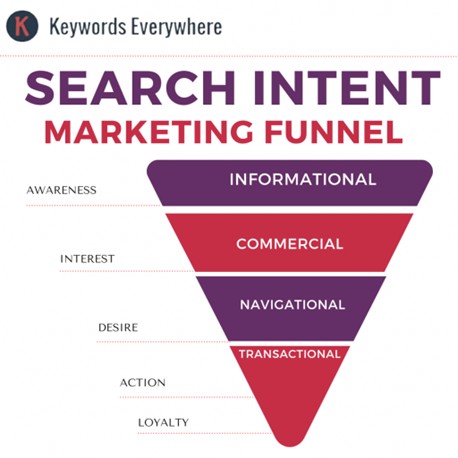
For example, if you’re selling an ergonomic chair, you can target everyone in the funnel– from those who don’t know what an ergonomic chair is to those who’re already well aware and ready to purchase.
To create awareness at the top of the funnel, you can target informational keywords like “why does my back hurt when i sit” or “how to fix lower back pain from sitting”.
People searching for these keywords don’t know yet that their solution comes in the form of a proper chair, but you can pave the way for creating that “awareness” and demand by answering their question in the most helpful manner possible, naturally and genuinely offering all the solutions to address their literal pain points. You can naturally talk about what an ergonomic chair does in the process, just keep it value-driven and natural rather than sounding like a hard sales pitch.
You can reserve the sales pitch when targeting commercial and transactional keywords. Commercial keywords are those queries indicating that the potential buyer is already researching products, services, or brands to buy. For example, “ergonomic chair vs gaming chair” or “best ergonomic chair for back pain”. Transactional keywords are search terms that signal higher intent and specificity.
For example, “ikea ergonomic chair” or “buy ergonomic chair”. Even if the transactional keyword is branded, you can still rank for such keywords and make it work in your favor by covering it from a different angle like “ikea ergonomic chair alternatives”.
Just make sure that all keywords you choose have business potential. For instance, don’t cover keywords just because they have the word “chair” in it. Stick to your lane and cover those that could potentially lead to a sale.
To improve chances of SEO ranking, implement the following keyword strategies:
● Target long-tail keywords with actual search demand
Especially if you’re a newer website, you need to mind keyword difficulty. The broader the search term, the tighter the competition. For quick wins in SEO ranking, long-tail keywords are your best bet. You can even discover and validate long-tail keywords without leaving Google.
Looking at the autocomplete section on Google, you can already draw lots of great ideas:
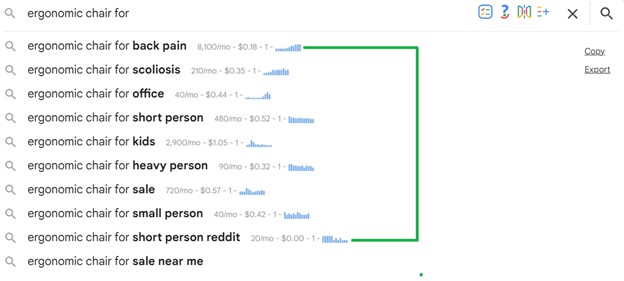
Just add prepositions like “for”, “with”, and “vs” and let Google expand the ideas. You can even readily view the search volume for every autosuggested term if you install the Keywords Everywhere browser extension. Installing our keyword tool also gives you more widgets for long-tail and other related keywords to seal your content strategy:
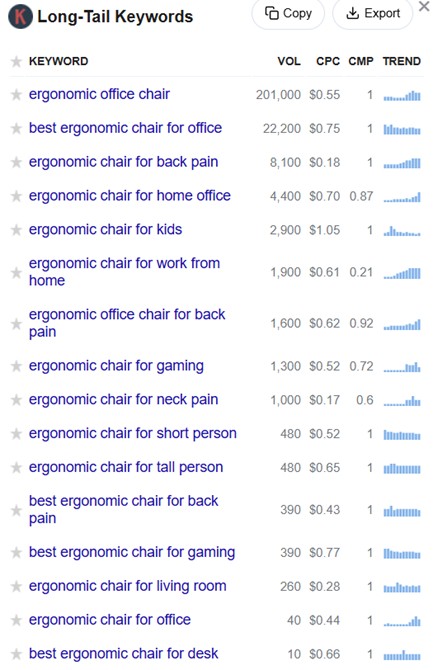
The goal is to find long-tail keywords that are specific, searched, and still within reach. Our Keyword Difficulty Checker helps you compare difficulty, volume, CPC, competition, and trend data before deciding which terms to target.
● Mind keyword placement
Keyword density and keyword matching no longer matter the same way they did. However, keyword placement is still crucial if you want search engines to better understand your content.
The concepts of primary and secondary keywords are still very much relevant. Your article should have a primary or focus keyword that you should highlight in the title, URL, first paragraph, body, alt text, meta description, conclusion, and a few of the headings. Instead of using the same primary keyword again and again throughout the article, you can use secondary keywords to reinforce the semantics. For example, if your primary keyword is ergonomic office chair, your secondary keywords can be:
- ergonomic chair for office
- office chair good for back pain
- office chair for back support
- best desk chair for back problems
- ergonomic chair for home office
Instead of creating different pages for keywords that mean the same thing, group keywords accordingly and create one dedicated page per unique search intent. This way, you can also avoid keyword cannibalization, which would only compromise your SEO rankings. Use these semantically related keywords naturally throughout the article while covering the main topic in a way that satisfies the search intent.
● Use topic clusters to establish authority
A topic cluster is composed of a pillar page (a broader topic) and its support pages (more specific topics relevant to the bigger topic), also called cluster or child pages.
Here’s an example of a topic cluster (with exact keywords + search volume):
Pillar Page: how to ease lower back pain (40,500)
Support pages:
- best sitting position for lower back pain (3600)
- why does sitting cause back pain (40)
- best chairs for back pain (6600)
- how to ergonomically sit at a desk (390)
- is ergonomic chair worth it (70)
There is no strict limit as to how many support pages a pillar page can have. The goal is just to interlink these pages to promote faster discoverability and show topical depth and authority. Again, it’s crucial to add internal links for SEO with intention, reinforcing both relevance and natural content supplementation.
● Steal keywords from your competitors
Creating topic clusters and doing keyword research from scratch require thought and strategy. Another SEO technique to improve your rankings is doing thorough competitor analysis.
With keyword research tools, you can uncover the pages driving the most visibility for competing sites. You can use free tools like our Top Pages Finder or Competitor Analysis Tool to check the top-performing pages of any given competitor, so you can see which specific pages are pulling in traffic and what topics, formats, and angles are working for them.
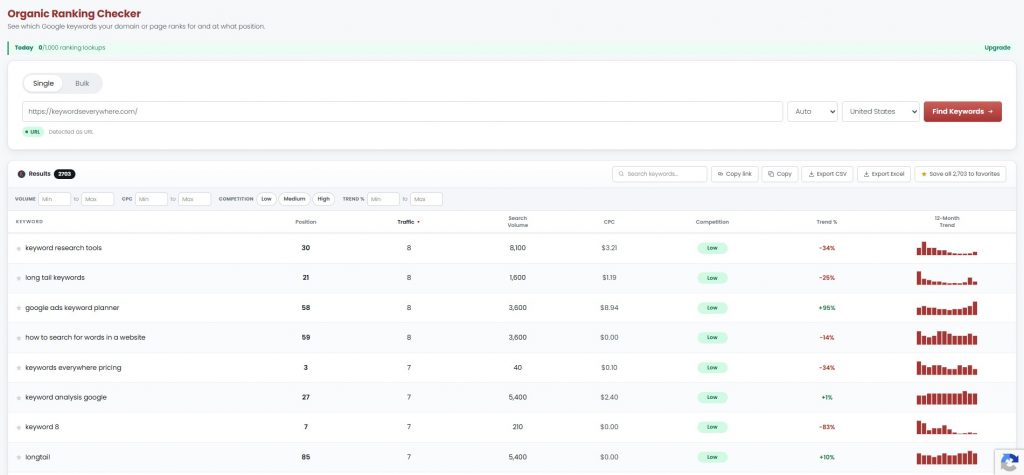
You can also use our Free Organic Ranking Checker to see which Google keywords a competitor’s domain or page already ranks for, along with position, estimated traffic, search volume, CPC, competition, trend percentage, and 12-month trend data. This gives you a clearer view of the keyword opportunities they’re already benefiting from.
For a more direct comparison, our Keyword Gap Tool can help you find the keywords your competitors rank for that you don’t. You can compare your site against up to 10 competitors at once, making it easier to spot missed opportunities and prioritize keywords that are already working in your niche.
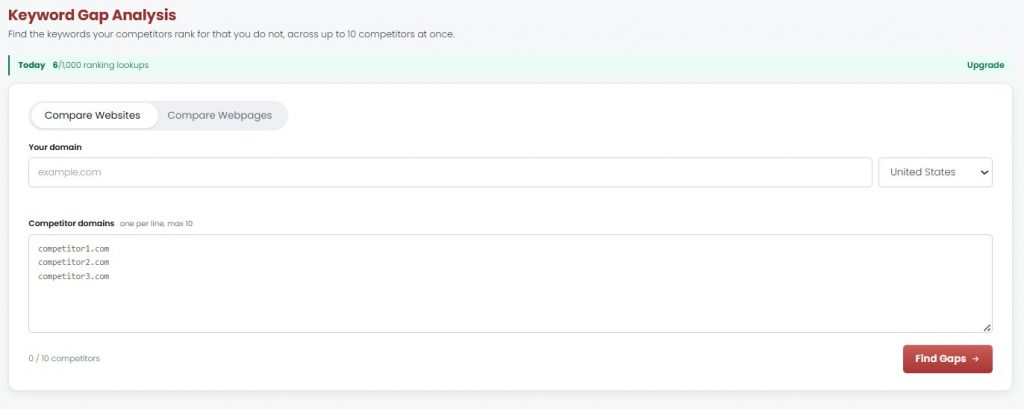
Using keyword opportunities and competitor research tools, you can reverse-engineer what’s already working and add more depth, clarity, and originality to outperform the top results.
● Check forums and YouTube comments
The key to ranking fast is becoming the best source of information for any given pain point. Exploring content gaps can help fast-track your way to the top of SERPs. People on forums like Quora and Reddit have real questions which could be your content strategy’s low-hanging fruit. You can even look at YouTube comments to get a feel of what the actual users are curious about.
The key is to watch out for common pain points and questions and build content that addresses those real issues upfront.
3. Tighten up your entire on-page SEO
Everything covered above (content+keywords) is a part of on-page SEO, but there are other on-page elements that you can cover to make sure that your pages can rank higher and earn more organic traffic.
● Schema Markup
Using schema markup and structured data can enhance how your listing appears in the search results, which can lead to better CTR and overall user engagement. This also helps Google and even AI models interpret information faster and more efficiently. Common examples include Product, LocalBusiness, Article, FAQPage, and Event schema.
For faster implementation, our free Schema Markup Generator can also help streamline schema implementation by generating valid JSON-LD for a wide range of content and business types.
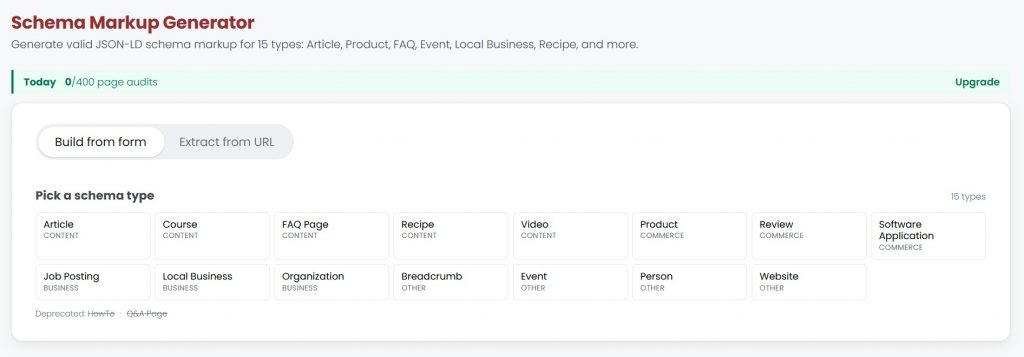
Once generated, our free Schema Markup Validator helps you review the markup before it goes live.
● Optimize for CTR
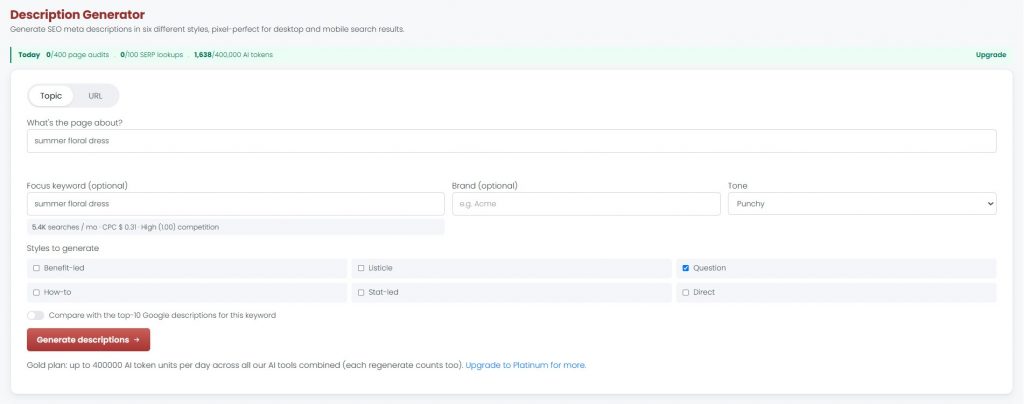
Speaking of CTR, though Google hasn’t confirmed it as a direct ranking factor, it hasn’t denied it either. Either way, improving your click-through rate helps make sure that your search engine rankings will lead to actual traffic. To improve your CTR, make your SEO titles and meta descriptions extra enticing and use the focus keywords strategically within these sections.
If your meta description sounds too generic, our free Meta Description Generator can help you create sharper copy, check competing descriptions, and find a better hook.
● Use header tags
Search engines are able to parse and index your pages more efficiently if you use proper HTML tags. Using H1, H2, H3, and so on helps structure your content logically. Even your bold text, paragraph spacing, and font size can give search engines contextual clues about the page’s overall flow and layout.
You can also use our Free H1 Checker to audit your page’s heading structure or study how top-performing pages organize their H1s, H2s, and H3s. This gives you a clearer starting point for building a page that’s well-structured, easy to scan, and easier for search engines to understand.
● Optimize for AI Overviews, Voice Search, and featured snippets
With the rise of featured snippets and AI Overviews, 60% of Google searches now end without a click. Like it or not, we all ought to figure out how we can position our brands in an increasingly zero-click search landscape.
The new rule of the game is establishing brand visibility and showing up inside AI responses. The fundamentals of optimizing for AI citations and traditional search are just similar anyway, so you ought to just focus on becoming a source worth citing. To do that, your best bet is delivering substance, offering the most comprehensive answer for the query, and making your expertise impossible for AI models to overlook.
● Strengthen internal linking
Internal links not only help search engines understand your site structure, but they also distribute link equity which is crucial for improving SEO rankings. Done well, they guide both users and crawlers to your most important pages.
● Create crawler-friendly URLs
Your URL structure should be clean, logical, and hierarchical. If you want to reinforce the relevance of your pages in the eyes of Google, URL optimization is one of the on-page SEO strategies that’s here to stay. Make sure there are no random numbers and nonsensical phrases, and use simple, descriptive keywords separated by hyphens.
● Optimize images and alternative text
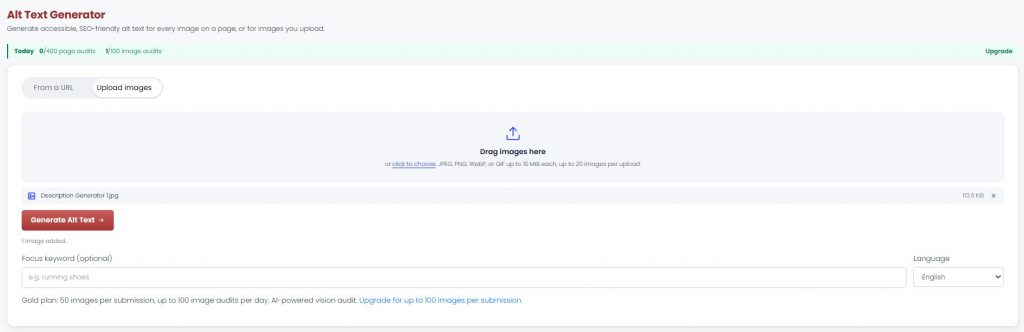
Compressing images helps your page load faster, and adding alt text helps crawlers easily interpret and categorize your images. Little fixes like this can go a long way in boosting overall search engine rankings and SEO performance. If writing alt text is slowing down your workflow, our free Alt Text Generator can help you create accurate descriptions in just a few clicks.
● Fix and avoid redirect issues
As websites evolve, pages get moved, and technical configurations are updated, it’s common for redirect issues to surface. Common redirect issues include redirect loops, redirect chains, and broken redirects, which gravely harm user experience, crawl budget, and link equity– not to mention compromise indexing and thus SEO rankings.
You can use tools like SEO Checker to stay on top of these issues in seconds, or try our Free Redirect Checker for a quick redirect-specific check.
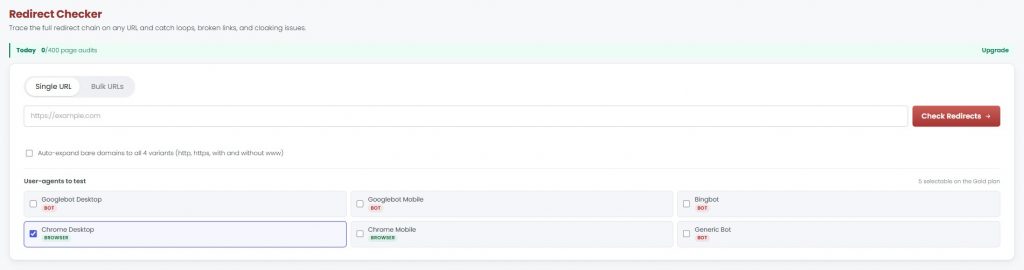
It traces the full redirect path and helps spot loops, chains, broken redirects, or unnecessary hops before they affect crawlability, link equity, and rankings. Overall, staying proactive helps you avoid major indexing and ranking issues down the line.
4. Build High-Quality Backlinks
Here are some modern link-building practices that can help you generate results and improve SEO rankings fast:
● Focus on link quality over quantity
It sounds like basic advice, but it’s worth repeating: link quality beats link quantity. A few backlinks from reputable, relevant sites can do more for your rankings than a large number of low-value links. Low-quality links can look unnatural, send weak trust signals, and sometimes create more cleanup work than SEO value. If you’re unsure about a site’s quality, our free Spam Score Checker can help you quickly spot potentially risky domains before pursuing a link opportunity.
● Produce link-worthy assets
Backlinks as ranking signals are designed to function as “votes of confidence”. Thus, Google was really hoping for websites to acquire them based on merit instead of manipulation. Over the years, Google has gotten better at detecting any spammy link schemes, so your best bet to grow your link profile healthily and sustainably is by earning them through the sheer quality of your content.
If you have the resources, producing valuable content through original research, data studies, and free tools can be a great way to attract backlinks naturally. If not, there are other more cost-effective ways to produce original content without breaking the bank. You can just take your time creating comprehensive guides, producing helpful graphics, or even compiling important industry statistics.
Tools like our free AI Text Generator can help speed up the first draft for guides, summaries, outreach copy, or supporting sections, but the real link-worthy value should still come from your own insight, examples, data, and usefulness.
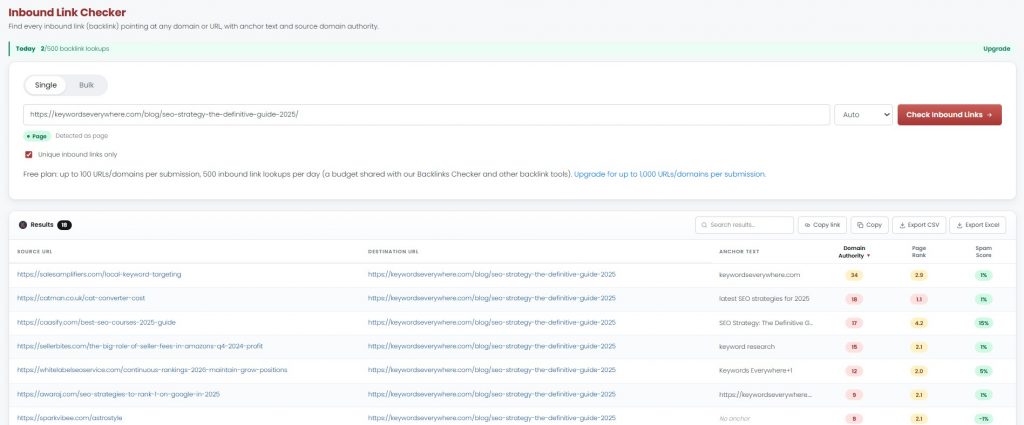
Once those assets start earning links, our free Inbound Link Checker can help you see which pages are actually attracting backlinks. You can review the source URL, destination URL, anchor text, domain authority, page rank, and spam score, making it easier to spot which content formats are pulling in the most authority.
● Treat link-building as a relationship-building exercise
Outreach is typically a core link-building activity as it speeds up the process and allows you to proactively build backlinks instead of just waiting for them. However, some SEOs approach it like some kind of mechanical activity, sending generic outreach emails to a list of loosely relevant websites without much thought, context, and personalization.
Modern outreach strategy isn’t about pursuing one-off transactional exchanges but considering the link itself as a byproduct of a solid and mutually beneficial relationship. This kind of collaboration leads to more than a link swap but other opportunities for future projects or partnerships like co-hosting webinars, ongoing guest contributions, joining expert roundups, and so on.
Your outreach and guest posting strategy should then be treated like a traditional networking event. For it to work and last, you need to personalize, build trust, offer value, and really hone in on the human element of the process.
Instead of straight-up asking for a link, offer something that builds trust and value. It could be sharing their content on your own social media channel, suggesting a broken link fix, proposing high-quality content they haven’t covered yet, or anything that’s mutually beneficial or genuinely helpful. Over time, those stronger relationships can lead to better backlinks, more relevant mentions, and stronger authority signals that help improve your SEO rankings.
● Maximize Local Listings
Especially if you have a brick-and-mortar business or need to reach a local base of clients, building local listings is non-negotiable. The most important one is your Google Business Profile. Optimizing your GBP can give you a real shot at appearing in Google Local Pack, the first 3 listings people see when they search for local products or services near them. Businesses in the local pack receive the majority of the local search clicks, capturing up to 44% of the traction.
Other local online profiles you should build include directories like Yelp, Better Business Bureau, and Bing Places. To find more local listing opportunities, our Free Listing Checker can show where your business is already listed and uncover directories your competitors have tapped but you haven’t yet. This helps you spot citation gaps and prioritize listings that are already working in your market.
● Link brand mentions
If you’ve been around the block for some time now, it could be that other websites are already talking about you. There are tools you can use to track such unlinked mentions, and there’s definitely no harm in politely reaching out to these websites and asking for a quick link. Just keep the ask simple and clear and approach it with utmost courtesy.
● Try the broken link building technique
Websites naturally link out to external sources. However, it’s more than normal for some pages on the internet to go inaccessible over time due to various reasons like redesigns, migrations, or simple neglect. Some websites can no longer keep track of these broken links, and when you show them the broken link and offer a relevant replacement, it’s usually an easy yes. Tools like SEO Checker can help you scan websites to instantly find broken links, helping you easily generate a list of broken-link prospects for your outreach campaign.
● Make sure your anchor texts match
If you’re guest posting, make sure the anchor texts pointing to your pages clearly describe what the corresponding pages are about. The more descriptive the anchor text is, the better. For example, if we are to launch a guest posting campaign, besides using the anchor text “Keywords Everywhere” or “keyword research tool” to point to our home page, we can also use other more descriptive search terms like “long-tail keyword research tool” or “affordable keyword research tool”, depending on the context of the article. Also, instead of linking to your home page again and again, you can also support your other core service pages and even pillar articles to help these important pages rank and build topical authority across the entire website.
● Monitor your backlink profile regularly
Backlinks are not a one-and-done task. New links can appear, old links can disappear, and some links may come from sites you do not actually want associated with your brand. Regular monitoring helps you understand where your authority is coming from and whether your link-building efforts are moving in the right direction.
You can use our free Backlinks Checker to help you review the backlinks pointing to your domain or specific pages, including the source URL, anchor text, domain authority, page rank, and spam score. This makes it easier to track link quality, spot useful patterns, and catch questionable links before they become a bigger issue. Our free Backlink Counter can also help you track the bigger-picture numbers at a glance.
5. Improve Technical SEO
Lots of technical SEO components are confirmed SEO ranking factors. Your site’s Core Web Vitals particularly Page Speed and Mobile Optimization are all key aspects of technical SEO. Site security is also a part of this department, so make sure these technical aspects are covered because even the highest quality content can’t rank without a strong technical foundation.
Technical SEO explained simply means strengthening the technical foundation that helps search engines crawl, index, and rank your content more effectively.
To make sure your website is technically sound and nothing stands between you and SEO ranking, always monitor the following:
- Maintain fast website load speed
- Ensure mobile responsiveness
- Create an XML sitemap
- Fix broken links
- Implement schema markup and structure data correctly
- Secure your website with HTTPS license
- Manage duplicate content with canonicalization
- Ensure site-wide performance optimization
- Regularly check your robots.txt file for crawlability issues. You can use our free Robots.txt Generator to build the file and Robots.txt Tester to verify crawler access.
6. Integrate social media strategically
Google did not confirm social media signals as a direct ranking factor, but Bing did. Besides, using social media strategically to promote your content and engage with your audience is great for your overall brand awareness.
You can combine both social media and SEO to supercharge your search engine marketing. You can use keywords in your bio, stay consistent in your messaging and brand identity, use strategic and local hashtags, and share your website’s content on social media to expand visibility.
To make that easier, you can use our free Social Media Post Generator to turn a topic or piece of content into ready-to-publish posts for Instagram, Facebook, LinkedIn, and X, with your preferred tone and hashtags included.
Posting your content across all your channels can also help you establish omni-presence on the web, which is crucial now that more and more people are treating social media platforms as search engines.
Why SEO is far from being dead
You may start to wonder, ‘why bother with improving SEO rankings when AI models will just take over?’ To start, Google still captures around 94% of the global mobile search market and processes over 400 billion searches per month. Although there’s no doubt about the rise of LLM usage and zero-click searches, people are still using Google to find information and solutions. Plus, LLMs pull information from high-ranking and authoritative pages, so the same SEO principles that help you rank will help you get cited more in AI responses.
Yes, SEO is evolving– and rapidly at that, but it’s far from being obsolete. You just ought to embrace modern SEO practices and work on establishing your brand as a trusted resource in your field. It’s a process, but it’s one that can bring about the most sustainable growth and momentum that makes the effort worth it.
FAQ
How long does it take to improve SEO ranking?
As long as you cover all core SEO activities from content creation to technical, on-page and off-page SEO, you’d be able to start seeing results in 3-6 months. If you stay consistent in your outputs and refining your strategies, significant improvements can be seen in 6-12 months. If you strategically target less competitive terms and produce top-level content that people and Google can’t help but notice, you’d be able to further accelerate progress.
How do I appear on top of Google search?
There are other ways to appear on top of Google besides traditional ranking. Optimizing your content for featured snippets and AI overviews can catapult your new content to the top of SERPs.
If you want to organically rank as the first blue link, you need a stronger SEO strategy and domain authority which aren’t built overnight. If you’re wondering whether your SEO work is paying off, our free Domain Authority Checker and Website Authority Checker can give you a quick snapshot of your authority score, backlink profile, and overall domain strength.
Over time, the more consistent and committed you are to publishing helpful content on the internet, the sooner you can establish topical authority in the eyes of both Google and users. It’s easier to rank higher across multiple search terms once you’ve already established yourself as a trusted resource in your niche.
Is SEO really worth the effort?
SEO is a long-term game, but it’s definitely worth it. Being visible on search engines reduces your reliance on paid ads and is the more sustainable SEM strategy. SEO done right will yield ROI and a definite competitive advantage that continues working behind the scenes for you for years to come.
Can I do SEO myself?
Yes! As long as you’re willing to learn and put in the time and effort to apply the core strategies, you can do SEO independently. Especially if you’re starting a small business or personal project, you can use this as an avenue to build a solid foundational understanding of how online visibility works. And even if you hire experts eventually, it still helps to know the ins and outs of this exponential growth tool.
How can I monitor my SEO rankings?
Your most accurate rank tracking tool is Google Search Console, showing you your average position for any given page as well as the keywords driving impressions and clicks to those pages. There are third-party SEO rank checkers as well that allow you to track your performance for a list of target keywords. Monitoring SEO rankings helps you get a sense of your performance trajectory and how algorithm updates are affecting your site. If you notice dips in ranking, trace the issue—whether technical, content-related, or competitive—and course-correct to stay on top of your SEO performance.
How can I maintain high SEO rankings?
There’s definitely no guarantee that you’ll stay number 1 once you reach the very top of SERPs. In fact, according to Google’s former Chief of Search Quality Udi Manber, ranking is influenced by click data. For instance, if 80% of people click on search result #2 instead of #1, Google may end up switching the positions based on actual searcher engagement. Ongoing optimization is then important to ensure that poor-performing pages are fine-tuned and high-performing ones are further upgraded and maintained.
What to do if I rank high but get little to no clicks?
Rework your SEO title and meta description to make them more engaging. Your organic click-through rate will suffer if your title tags are too bland and uninteresting. Front-load the primary keyword and add more power words like “Ultimate”, “Easy”, or “Secrets. Keep the title under 60 characters and the meta description under 160 to avoid truncation. Our free Character Counter can help you quickly check title, meta description, social post, or SMS length before publishing, so your copy fits the right limit.
Also, make the value proposition really clear and do what you can to make both the language and calls to action as compelling as possible. Our free Title Tag Generator, Headline Generator, and Description Generator can also help you brainstorm more click-worthy titles and descriptions.
How can I boost my SEO rankings a few notches higher?
Another way to improve SEO rankings is to find “striking distance keywords”. These are search terms your website is already ranking for (though not high enough), typically in positions 11-30. They can be easy SEO wins if you take the time to tweak and improve them in hopes of pushing them to the top. You can reinforce your primary keyword, add more semantic keywords naturally, do more on-page optimization, tighten technical SEO, and expand content for more depth and value. Done right, these pages can be your low-hanging fruit for driving more impressions, clicks, and conversions.
If there’s one biggest driver of SEO rankings, what would it be?
There are hundreds of factors that go into Google’s ranking algorithms. However, the general consensus always points to high-quality and relevant content as the single most important driver of organic search rankings. After all, it’s what earns trust and attention and is exactly what users come to look for. Every other strategy in SEO exists to support the content you publish.
Final Thoughts
At the end of the day, your page will rank based on the work that you put in. It will also perform relative to how fierce the competition is. Thus, it’s a smart move to know the search landscape of a target keyword before you give it a shot. If you want to rank faster, it’s best to identify content gaps or keywords/topics that the target audience is actively searching but no one is thoroughly covering. This way, you’re not just maximizing quick and easy wins but are also helping make the internet better overall.