

It’s totally normal for SEO needs to change because search itself never really sits still. What worked last year might need a refresh today, especially as business goals evolve. This ongoing shift in SEO is exactly what pushes people to reassess their tool stack.
If you’ve been using Mangools and recently realizing how it no longer covers everything you need, this roundup walks through solid Mangools alternatives worth considering.
Best Mangools Alternatives
For many users, Mangools is a great starting point for keyword research and basic SEO tasks. Still, no single tool works best for every workflow. Depending on whether you prioritize data depth, scalability, or specific SEO functions, some Mangools alternatives may be a better match.
1. Keywords Everywhere
Plans start at: $7 per month
Free Trial: Freemium model
If you want a refreshing way to go about keyword research, Keywords Everywhere can simplify keyword validation by bringing data directly to your browser. While Mangools is a traditional SEO suite, Keywords Everywhere works as a browser-based overlay, which means no more constant tab-switching or running one-off reports.
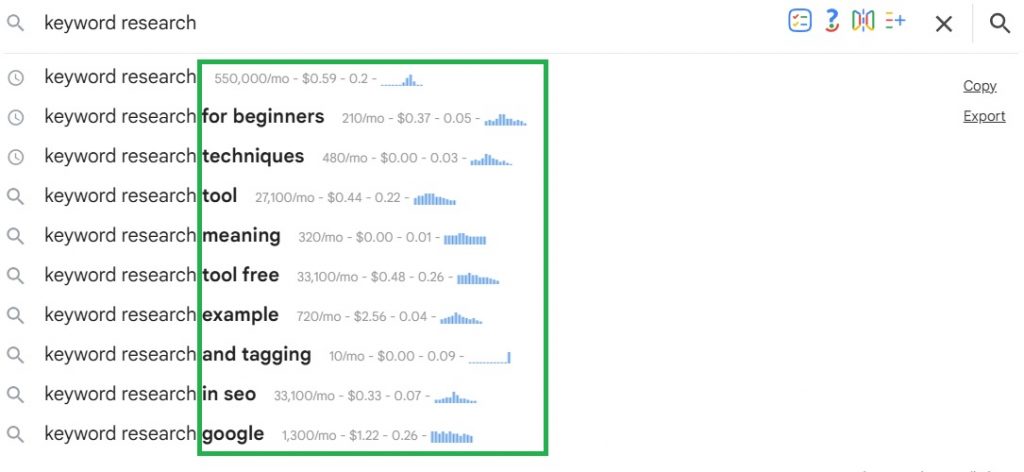
Instead of running separate keyword checks, Keywords Everywhere displays search volume, CPC, competition, and trend data directly inside Google Search, Google Trends, YouTube, Amazon, and more.
For example, on Google, you can readily view search volume and other keyword metrics right below the search box:



You can access the same metrics for each auto-suggested term as well:
Plus, there are different widgets on the sidebar, neatly categorizing keywords to further streamline discovery and analysis.
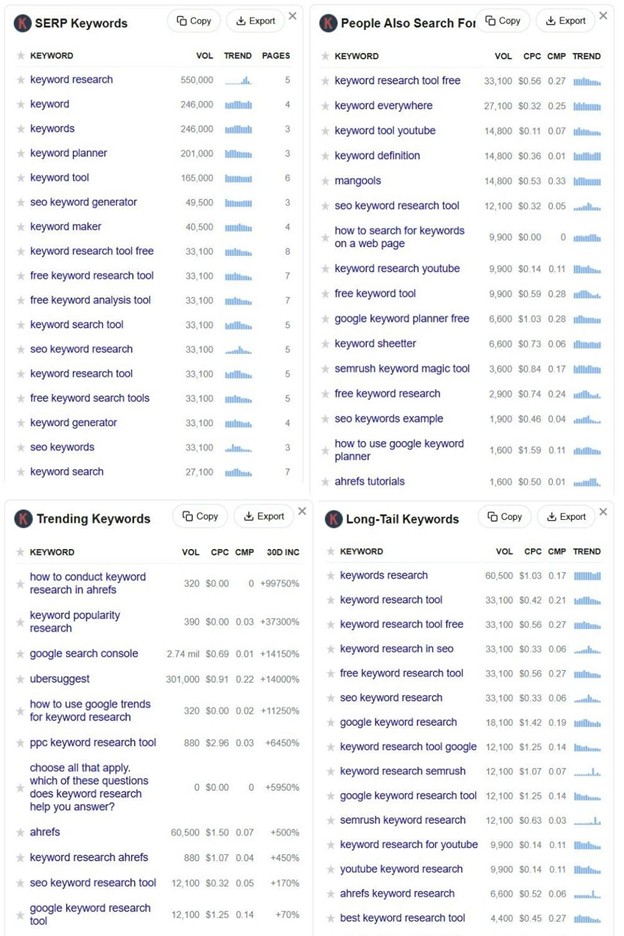
Keywords Everywhere does so much more including competitor analysis, SERP analysis, SEO audits, and on-page optimization.
Keywords Everywhere vs Mangools: Verdict
Keywords Everywhere is a better fit if speed, convenience, and low-friction research matter more than having a full SEO dashboard. It’s perfect if you want to validate ideas on the fly, spot long-tail opportunities while browsing, and avoid jumping between tools just to answer simple questions. Mangools, by contrast, is better suited for users who prefer structured workflows, cleaner SERP snapshots, and dedicated modules for keyword research and rank tracking.
Overall, this isn’t an either-or choice. Keywords Everywhere is often used on top of other tools. At $7/month, it’s an easy add-on that speeds up research without replacing your main SEO platform.
2. SE Ranking
Plans start at: $65/month ($52/month billed annually)
Free Trial:14-day free trial (No credit card required)
Mangools won many users over because of its simple, intuitive suite. Its UI was thoughtfully developed to be seamless, devoid of the typical feature creep SEOs often encounter in many tools.
Instead of packing as many features as possible into a single screen, Mangools breaks its toolkit into 5 different modules (KWFinder, SERPChecker, SERPWatcher, LinkMiner, and SiteProfiler) to reduce cognitive overload and follow through on a clear, linear workflow.
That’s why Mangools is highly regarded as one of the most beginner-friendly SEO platforms. While Mangool’s simplicity and decision-focused design work extremely well for most users, serious SEOs may eventually outgrow the platform.
Teams seeking broader SEO coverage without a major price jump often move to more scalable Mangools alternatives such as SE Ranking.
SE Ranking simply has deeper technical and operational tools Mangools that lacks. For example:
- Advanced site auditing– SE Ranking performs extensive technical checks across 110+ metrics, including Core Web Vitals and JavaScript rendering. Mangools only offers a more lightweight site audit.
- On-page SEO checker– SE Ranking provides page-level optimization scores with actionable recommendations, while Mangools does not offer a dedicated on-page SEO optimization tool.
Page Changes Monitor– Used to track competitor or team changes to titles, headings, and meta tags. - Keyword grouping & tagging– SE Ranking allows keywords to be grouped, tagged, and managed at scale, while Mangools focuses primarily on individual keyword analysis.
- White-label reporting & client access– SE Ranking supports white-label reports and client access features, while Mangools offers more limited reporting customization.
- Social media management– SE Ranking supports social media scheduling and monitoring, whereas Mangools focuses solely on SEO features.
- Backlink Toxicity & Gap Analysis– While both track backlinks, SE Ranking includes backlink risk indicators and a Backlink Gap Analyzer to surface link opportunities your competitors have but you don’t. Mangools’ backlink tools focus more on discovery and link metrics, without built-in toxicity scoring or automated gap analysis.
- Advanced Local SEO– SE Ranking also offers a local marketing tool with NAP consistency checks and localized rank tracking down to the ZIP code.
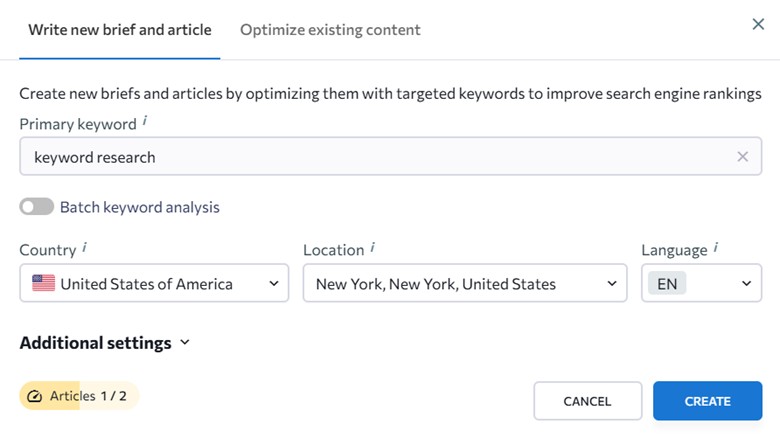
- Content Marketing & AI Suite– SE Ranking even includes a dedicated Content Editor with real-time SEO scoring, AI-assisted writing tools, and a content planner. Mangools has no native content optimization or NLP-style analysis tools.
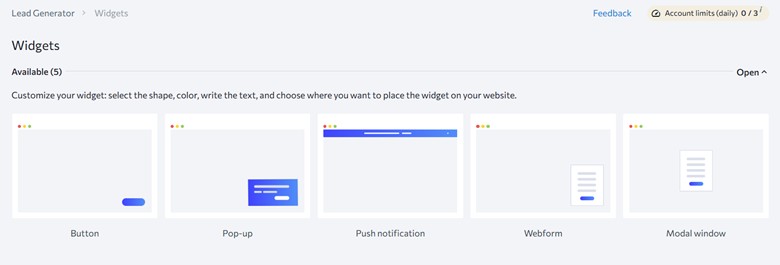
- Lead Generator– A unique SE Ranking tool for agencies that allows you to embed a widget on your site to generate SEO reports for visitors in exchange for their email addresses.
- Social Media Management– SE Ranking also allows for scheduling and monitoring social media posts, a feature not available in Mangools.

SE Ranking vs Mangools: Verdict
At $52/month for SE Ranking vs $18.85/month for Mangools, the price gap is relatively modest when you consider the difference in feature depth. For users who have outgrown Mangools’ simplicity and need broader technical, operational, and agency-ready capabilities, SE Ranking offers significantly more value per dollar.
The most important feature that makes SE Ranking stand out from competitors like Mangools is its Agency Pack (White-Label Reporting + Lead Generator).
While most SEO tools stop at analysis and reporting, SE Ranking extends into client acquisition by allowing agencies to generate branded SEO reports directly from their own websites. This shifts the platform beyond pure research and into business operations.
3. Semrush
Plans start at: $199/month ($165.17/month billed annually)
Free Trial: 7-day free trial
Many teams find that once their work expands beyond keyword research into content planning, PPC insights, and broader digital strategy, SEMrush’s all-in-one platform starts to feel like a better fit than Mangools’ more narrowly focused suite.
Here’s how those differences play out in practice, starting with keyword research and content planning.
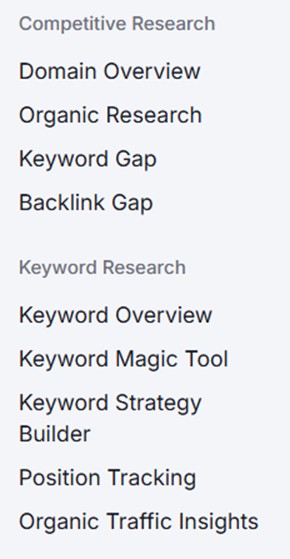
Mangools helps validate keywords. SEMrush goes further by turning those keywords into structured content plans using tools like Keyword Magic, topic clustering, and content gap analysis. This makes it easier to build and scale content strategically.
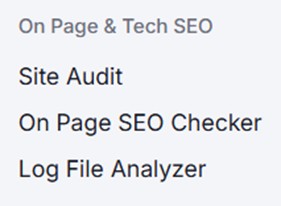
SEMrush also includes a full Site Audit crawler that flags crawlability issues, broken links, performance problems, and on-page SEO gaps. This is a major step up for teams that need to manage technical SEO at scale.
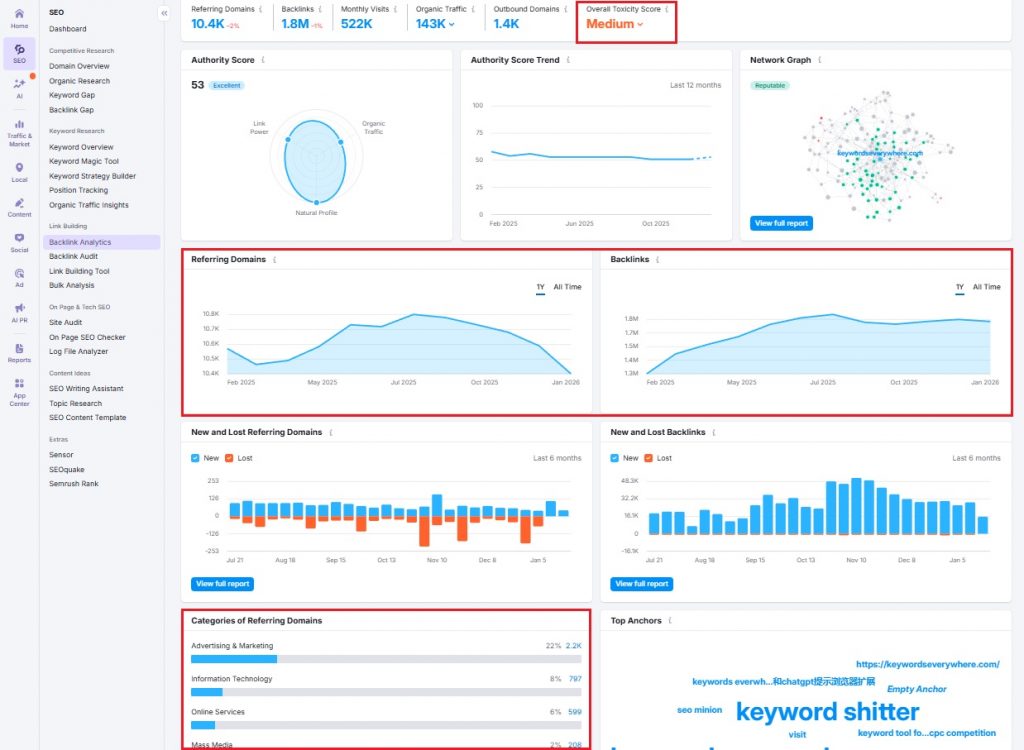
And while Mangools is useful for a quick backlink check, SEMrush is built for deeper analysis, letting you track link churn over time, analyze anchor text patterns, and identify links that may pose cleanup or risk issues.
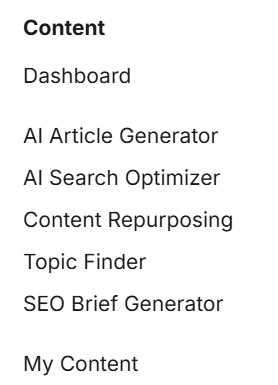
On the content side, SEMrush doesn’t stop at keywords. It supports the entire content lifecycle. With tools like Topic Research, the SEO Writing Assistant, and AI-powered content features, teams can plan, create, and optimize content all in one place.

SEMrush also layers in PPC and advertising intelligence. Users can analyze competitors’ paid search ads, display campaigns, Shopping ads, and landing pages– capabilities Mangools doesn’t offer. This makes SEMrush a stronger fit for teams running SEO and paid acquisition side by side.
For teams juggling multiple channels, SEMrush simplifies the stack. On top of SEO, it brings social media management and link building into one platform, so you can schedule posts, monitor performance, and manage outreach without breaking your workflow.
Semrush offers 50+ specialized tools, many of which have no equivalent in Mangools. This all-in-one coverage is why it often feels like a more complete long-term solution for growing teams.
Semrush vs Mangools: Verdict
Mangools is budget-friendly for basic SEO, but SEMrush starts to pay for itself once you’re coordinating SEO, social, and link-building across several campaigns. The payoff comes from faster workflows and better visibility across channels.
4. Ahrefs
Plans start at: $129/month ($108//month billed annually)
Free Trial: No Free Trial
Users initially pick Mangools because of how straightforward it is, showing who ranks, how strong those pages are, and whether the competition looks beatable. It doesn’t flood the user with dozens of secondary metrics, which is perfect for many bloggers, freelancers, and small teams. For some users, Mangool’s simplicity is a feature, not a limitation.
However, if your strategy requires you to operate with evidence-based planning and think in portfolios, Ahrefs starts earning its keep. If pages are no longer isolated blog posts but strategic investments that ought to compete for links, crawl budget, and internal equity, Ahrefs’ analysis-heavy features like Parent Topics, Top Pages, and Content Gap reports help SEOs build clearer, data-driven content strategies.
Ahrefs is also almost universally recognized for its depth, particularly its massive backlink index. But it does a lot more too. On the technical side, Ahrefs includes a full Site Audit that checks for 100+ on-page and technical issues. This becomes especially useful as sites grow, when small crawl or indexation problems can slowly hurt performance.
Site structure matters more over time too. Ahrefs displays broken links, orphaned pages, and internal linking issues that affect how authority flows through a site.
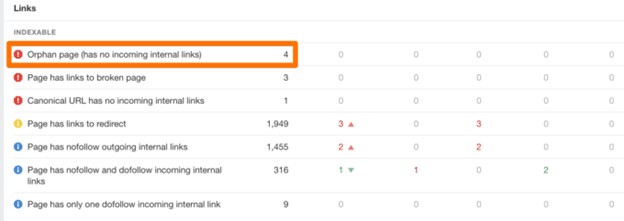
Data scale and freshness finally tie everything together. Ahrefs runs one of the largest commercial web crawlers available, which is why its backlink index and SERP data are often treated as industry benchmarks.
Overall, enterprise tools like Ahrefs become the better Mangools alternative when SEO moves from experimentation to accountability. When clicks and rankings have real business implications, SEOs prefer tools that reduce guesswork.
Ahrefs vs Mangools: Verdict
Ahrefs is rather more difficult to learn and definitely more expensive. Mangools, on the other hand, is super budget-friendly with an interface that’s easy to scan and fast to learn. But if you’re managing massive sites or aggressive link campaigns, Ahrefs’ precision can justify the cost..
With Ahref’s larger keyword database and advanced competitive research features, it doesn’t just help you find ideas but helps you avoid the wrong ones. Its comprehensive SEO ecosystem and much larger proprietary data set makes it ideal for teams managing SEO at scale.
5. Ubersuggest
Plans start at: $12/month (Lifetime Price: US$120)
Free Trial: 7-day free trial
While Mangools is highly regarded for its specialized keyword research (KWFinder) and SERP tracking, Ubersuggest positions itself as a cost-effective alternative that bundles keyword research with content, backlink, and site audit features. It’s often chosen by budget-conscious users, and some even find it more intuitive and simpler to navigate.
Ubersuggest also recently released the AI Keyword Overview Feature merging keyword-level data and content ideation features powered by AI. This is especially useful for users who want keyword insights and content direction in one place.
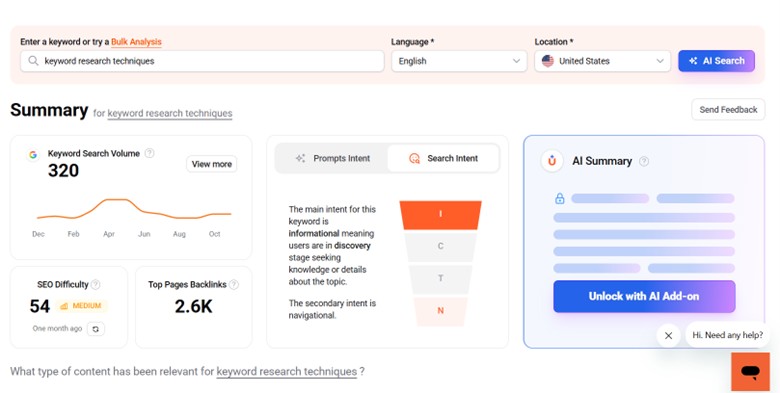

While Mangools focuses on streamlined keyword and SERP analysis, Ubersuggest adds several layers that Mangools doesn’t offer, such as AI-powered content creation, an A/B testing significance calculator, and Advanced Content Ideas based on top-performing competitor pages. And with access to group coaching backed by Neil Patel’s expertise, Ubersuggest generally appeals to users looking for a broader, more guided SEO experience.
Mangools Vs Ubersuggest: Verdict
Mangools is the better choice if you want precise keyword difficulty, cleaner SERP analysis, and confidence in ranking decisions. Ubersuggest, on the other hand, wins on accessibility and value.
It’s a strong option for beginners, solo creators, and small businesses that want keyword research, content ideas, backlink data, and basic audits in one affordable, easy-to-use platform. If your priority is depth and accuracy, Mangools has the edge. If your priority is simplicity and budget value, Ubersuggest is often the more practical pick.
In fact, its price structure is probably its biggest differentiator with lifetime pricing available. While most SEO tools lock users into monthly subscriptions, Ubersuggest offers a one-time payment option that generously grants long-term access within plan limits. This makes it especially appealing to freelancers, startups, and small businesses that want predictable costs without ongoing SaaS commitments.
6. Serpstat
Plans start at: $69/month ($50/month billed annually)
Free Trial: 7-day free trial
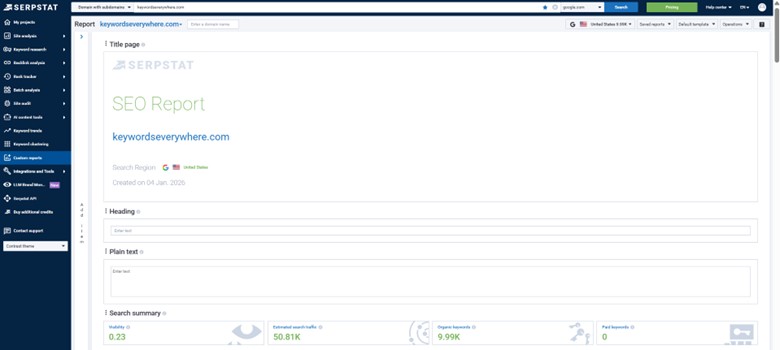
Serpstat offers a broader, more analytical toolset that includes advanced keyword clustering, competitive gap analysis, technical site audits, backlink insights, and customizable reporting.
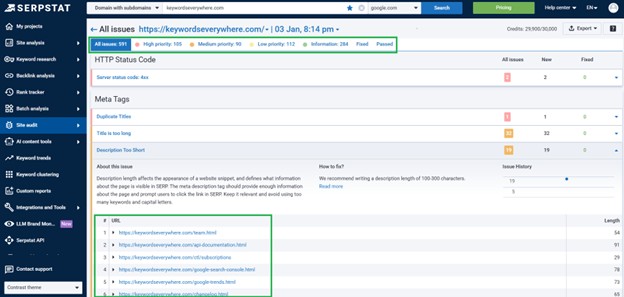
Unlike Mangools’ SiteProfiler, which focuses primarily on domain-level metrics, Serpstat provides a more comprehensive and granular technical SEO audit with extensive issue detection and tracking. All the issues are categorized and labelled according to severity and issue type, and the list of problematic URLs is also laid out in a fix-ready format.
Serpstat also goes beyond analysis with AI-driven tools for content auditing and generation, making content optimization and creation faster and more efficient.
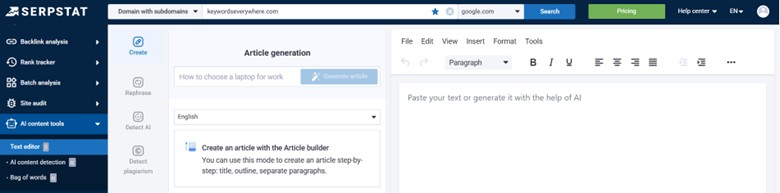
If you’re running more involved SEO campaigns, Serpstat fits the bill. It handles large keyword sets efficiently, provides historical competitor and backlink data, and gives a clearer view of organic performance across domains. For agencies, multi-user access and white-label reports also add real operational value.
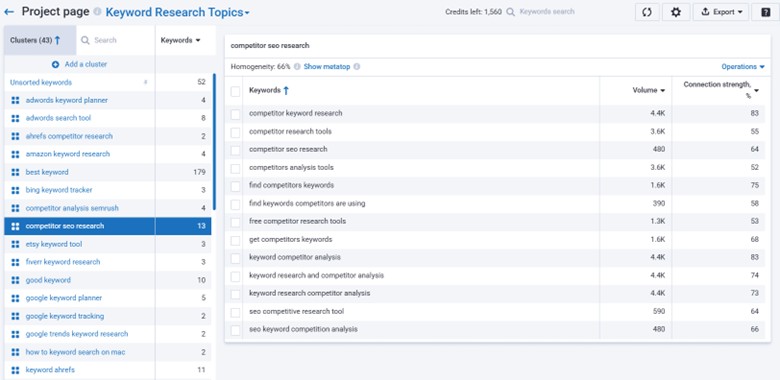
Another very competitive feature is Serpstat’s keyword clustering tool, which automatically groups large keyword lists into meaningful clusters based on shared terms and search intent. This helps you save a lot of time and effort organizing thousands of keywords into clear topic groups, eliminating the need to work through flat, overwhelming lists.
Mangools vs Serpstat: Verdict
Mangools is often seen as more beginner-friendly with a cleaner, easier interface and simpler navigation. Serpstat, on the other hand, is a more full-featured SEO platform, covering not just keyword research but also site audits, rank tracking, backlink analysis, and detailed competitor research all in one suite.
While Mangools works well for quick research and straightforward SEO tasks, Serpstat clearly offers a more complete toolkit for users who want to build structured content strategies, analyze competitors in detail, and maintain technical SEO at scale.
7. Moz Pro
Plans start at: $49/month ($39/month billed annually)
Free Trial: 7-Day Free Trial
Moz is a solid Mangools alternative for users who want to move beyond lightweight keyword research into a more structured, process-driven SEO workflow. While Mangools excels at fast keyword discovery and clean SERP snapshots, Moz brings those capabilities together with stronger site auditing, rank tracking, link analysis, and standardized reporting in a single platform.
Its site audit tool is also better suited for ongoing technical SEO, with clearer issue categorization and tracking over time. Mangools, on the other hand, doesn’t have a true site crawler for technical diagnostics.
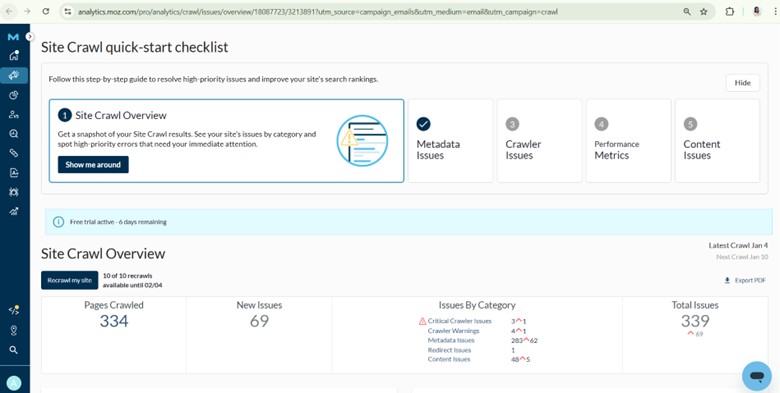
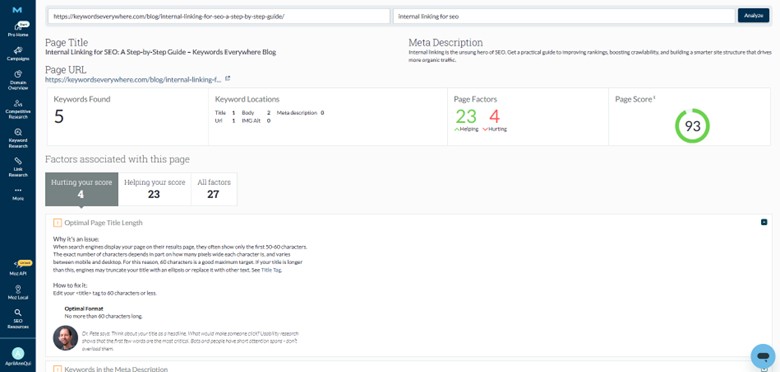
Another purpose-built tool that Mangool lacks is a dedicated on-page auditing feature. Moz’s On-Page Grader thoroughly covers page-level optimization, generating a score and clear, actionable recommendations.
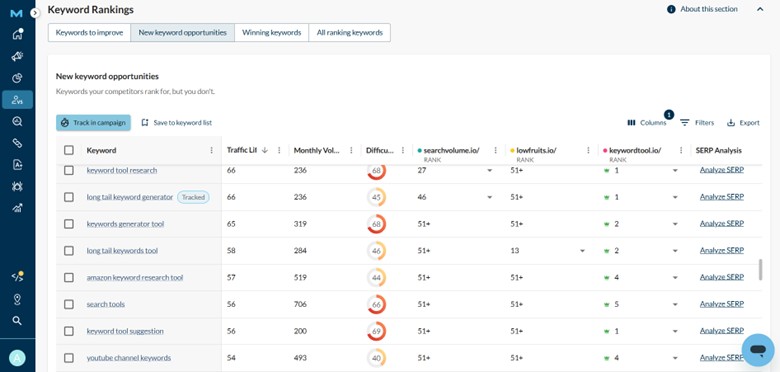
Moz also offers Keyword Gap Analysis to help you see where your keyword coverage falls behind. You can check which keywords rankings to improve, keyword opportunities to explore, and the keywords you’re already winning in comparison to target competing sites. Moz marked this tool New, and upon close checking, some data are not quite accurate, but it’s generally a great starting point for framing competitive keyword strategy.
Mangools vs Moz Pro: Verdict
If SEO is an occasional task, Mangools is usually enough. If SEO is a continuous responsibility with multiple moving parts, Moz Pro is the stronger option. Plus, Moz is also widely chosen for its familiar metrics, such as Domain Authority, which many teams and stakeholders already understand, making reporting and communication easier. Mangools doesn’t have an equivalent proprietary metric and instead pulls authority data from external sources.
Conclusion
When SEO gets more competitive, tool choice starts to matter. Mangools is a solid starting point, but evolving SEO strategies need more firepower. This is where more advanced alternatives justify the switch. After all, SERP competition isn’t forgiving and stronger tools can significantly reduce costly guesswork.