
There’s no doubt that Semrush is one of the most powerful all-in-one SEO platforms on the market, offering everything from keyword research and competitor analysis to site audits and rank tracking. That depth comes at a cost, though—and not every user needs (or wants) such a broad toolkit.
Whatever you’re looking for, the list below covers solid SEMrush alternatives built for different SEO goals and team sizes.
Best Semrush Alternatives
Whether you’re looking for a more affordable option, a simpler workflow, or a tool that excels in a specific area, there are plenty of strong Semrush alternatives worth considering.
1. Keywords Everywhere
Plans start at: $7 per month
Free Trial: Freemium model
For many solo creators, bloggers, founders, and lean marketing teams, SEMrush can feel like overkill. It’s powerful, but it assumes you’re running structured research sessions, tracking multiple competitors, and managing SEO as a data-heavy process.
Keywords Everywhere, by contrast, works in the background of tools you already use—Google, YouTube, Amazon, Reddit, Quora, etc—surfacing keyword volume, CPC, trends, and tightly grouped keyword ideas as you browse.



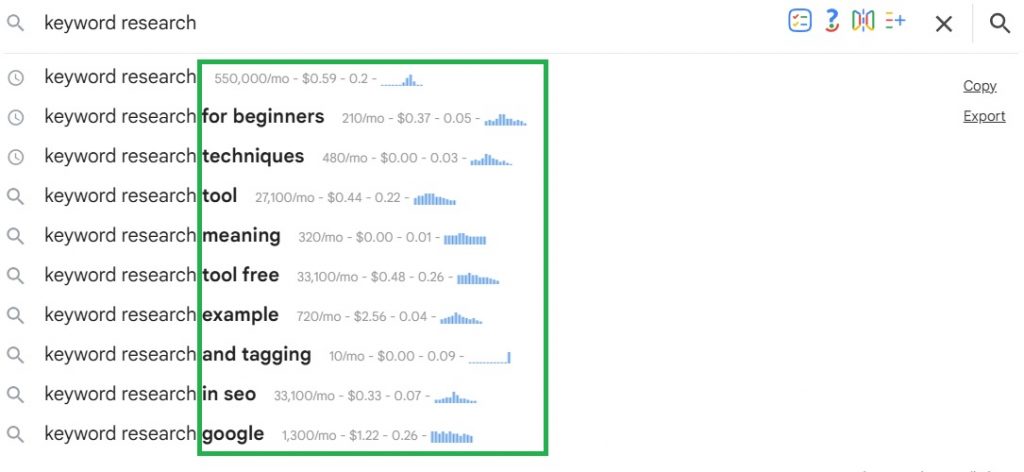
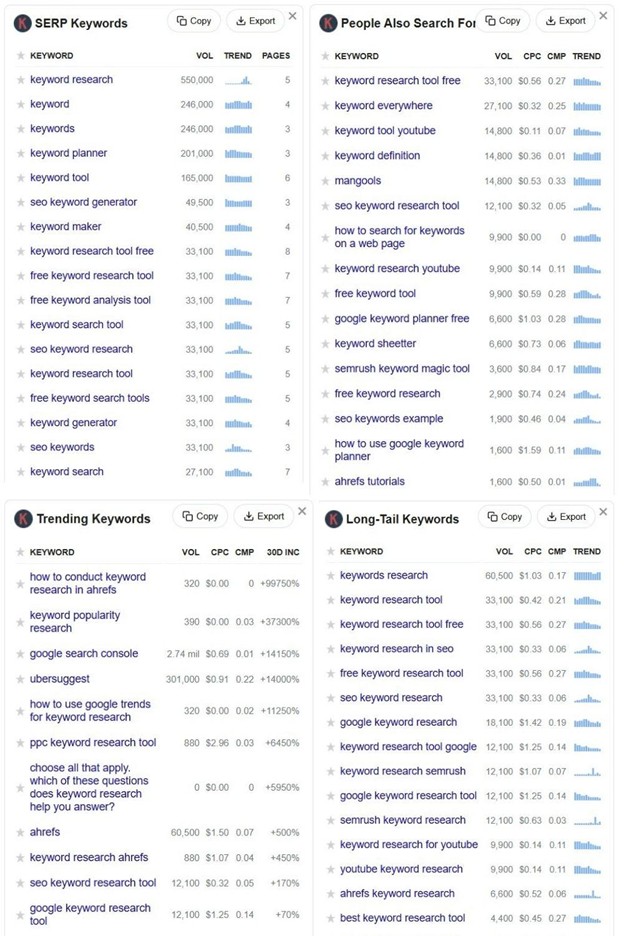
In day-to-day content work, this often replaces SEMrush for:
- Validating keyword ideas quickly
- Expanding topics without running full reports
- Spotting long-tail opportunities in real time
- Making go/no-go decisions on content ideas
Instead of exporting keywords, analyzing dashboards, and managing credits, you can assess demand and relevance instantly.
Keywords Everywhere’s biggest edge is workflow efficiency. By placing keyword metrics directly inside search results and discovery platforms, it eliminates tab-hopping and keeps research moving without breaking focus.
If you do prefer the more traditional SEO-tool workflow, Keywords Everywhere also offers standalone tools like Keyword Finder, where you can enter a seed keyword and analyze results in a dedicated interface.
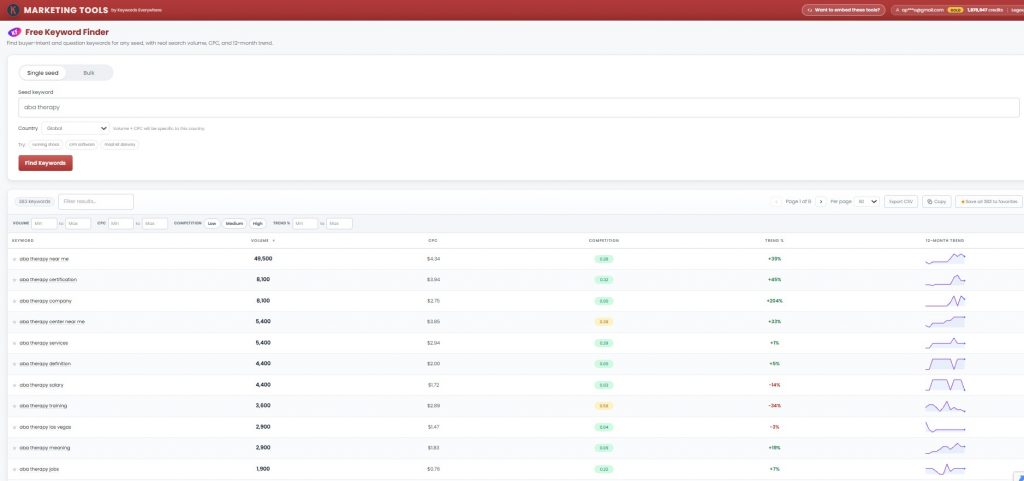
For users who need broader SEO coverage, Keywords Everywhere also complements keyword research with SEO Minion for on-page SEO and SEO Checker for technical health checks.
Keywords Everywhere vs Semrush: Verdict
Keywords Everywhere becomes a realistic SEMrush alternative when your SEO needs are lightweight. If you don’t rely on deep backlink audits, large-scale rank tracking, or complex competitor analysis, our no-frills browser extension can handle day-to-day SEO without the overhead of an enterprise platform.
2. SE Ranking
Plans start at: $65/month ($52/month billed annually)
Free Trial:14-day free trial (No credit card required)
Many teams consider switching from Semrush to SE Ranking when they realize they’re paying for a lot of power they don’t fully use. For as low as $65 per month, SE Ranking already covers core SEO needs like keyword tracking, competitor research, site audits, and backlink monitoring.
For many users, SE Ranking simply feels more manageable. Pricing is straightforward, limits are generous, and day-to-day SEO work doesn’t come with constant anxiety about hitting caps or upgrading plans.
Both tools also support PPC, but at different depths. SE Ranking focuses on practical paid search insights, including a Traffic Distribution by Country metric that shows where advertisers are allocating budget geographically. Semrush goes further with deeper ad history, larger databases, and e-commerce-specific tools.
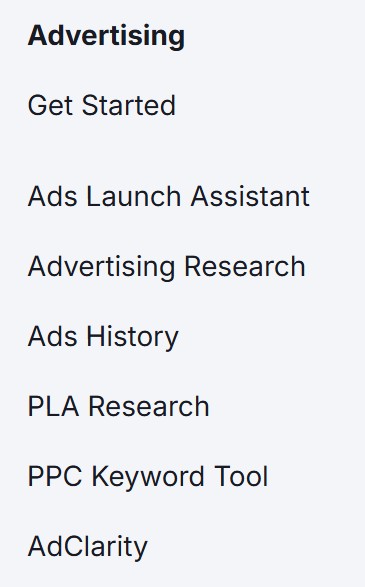
Another distinction is that SE Ranking provides rank tracking across Google, Bing, Yahoo, and YouTube, which is especially useful for teams targeting non-Google surfaces or video search visibility. Semrush keeps most of its core tracking and analysis tightly focused on Google, making SE Ranking the more flexible option for multi-engine strategies.
When it comes to technical SEO, SE Ranking also offers notably higher crawl allowances at comparable price points. Mid-tier plans can handle around 250,000 pages per month, compared to Semrush’s typical 100,000-page limit. For large sites or agencies managing multiple domains, this reduces the need to ration crawls or upgrade prematurely.
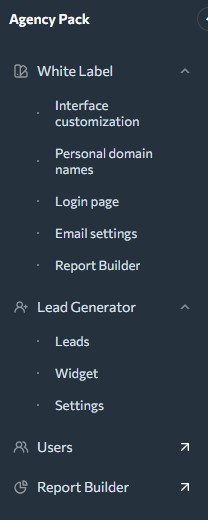
SE Ranking takes a more agency-friendly approach to reporting as well, with unlimited templates and a cleaner setup for automated, white-label client reports. Semrush offers powerful reporting features, but its tighter structure and plan-based limits can feel heavier for teams handling frequent deliverables.
For teams watching costs closely, SE Ranking is frequently preferred to Semrush thanks to higher keyword and project limits and a more approachable interface. Semrush delivers broader marketing coverage, but SE Ranking keeps the focus on essential SEO at nearly three times lower pricing.
SE Ranking vs Semrush: Verdict
If competitive research and PPC insights are central to your strategy, Semrush definitely has the edge. However, users who downgrade to SE Ranking often do so after realizing how much of Semrush’s feature set they weren’t actually using.
For most teams, SE Ranking strikes the sweet spot– strong SEO coverage, room to scale, and tighter cost control without the mental overhead of a massive all-in-one system.
3. Ahrefs
Plans start at: $129/month ($108//month billed annually)
Free Trial: No Free Trial
SEMrush has always been seen as broader and more operational. Instead of going deepest in one area, it covers more surfaces: SEO, PPC, content, social, competitive intelligence, and reporting. It shines when teams need cross-channel visibility, stakeholder-friendly dashboards, PPC insights, and centralized workflows. The trade-off is that some metrics are more blended and less reverse-engineerable than Ahrefs’. Ahrefs, by contrast, focuses on signals you can break down and act on. For example, its KD score is built directly from the backlink profiles of the pages ranking in the top results, rather than a composite or heuristic score. This grounds difficulty in the strongest ranking factor– links– making it easier to translate the metric into something more actionable.
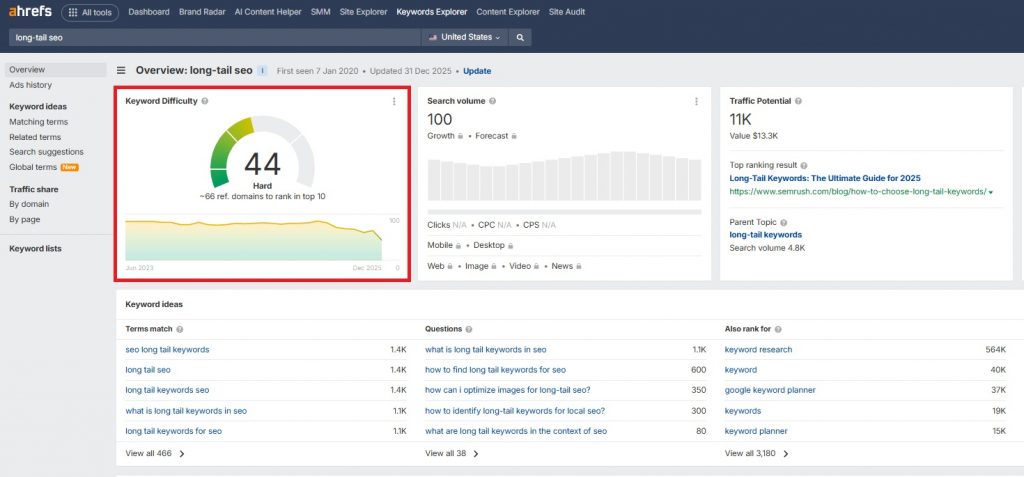
That same precision carries into Ahrefs’ Clicks, Return Rate, and Traffic Potential metrics. Instead of stopping at raw search volume, Ahrefs estimates how many searches actually result in clicks, how often users repeat a query, and how much total traffic a page could earn by ranking for a primary keyword plus all its related long-tail terms. This helps teams avoid zero-click queries and prioritize topics based on real traffic upside.
On the competitive research side, Ahrefs’ Content Gap and Link Intersect tools go deeper than most alternatives. They spell out which keywords competitors rank for that you don’t and which sites link to competitors but not to you—highlighting high-probability opportunities rather than generic “top competitors.” This makes Ahrefs particularly strong for reverse-engineering what’s already working in a market.
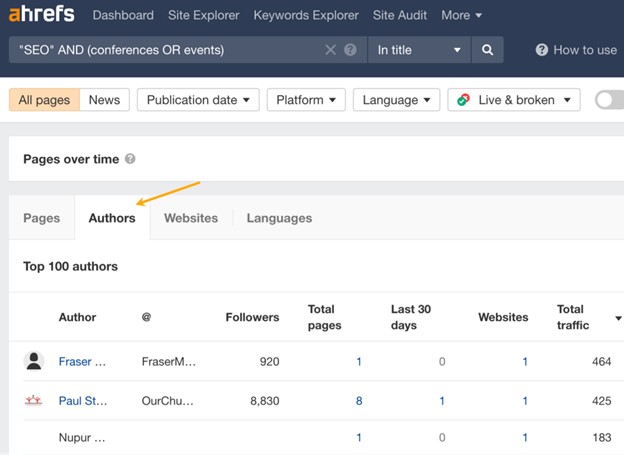
Its Linking Authors section is also a huge time-saver. By mapping backlinks to real writers (not just domains), Ahrefs makes outreach more targeted and relationship-driven, which reduces guesswork compared to domain-only link lists.
Ahrefs vs Semrush: Verdict
The real difference isn’t feature count, but intent. SEMrush is designed to support ongoing marketing operations and reporting across teams, while Ahrefs is designed to reduce uncertainty in SEO decisions. If you need clarity before committing resources, Ahrefs shines; if you need coordination across channels, SEMrush delivers.
At a high level, Ahrefs is the go-to for deep SEO work, and SEMrush is the go-to for broader marketing ops. The choice depends on how specialized your work is.
4. Moz Pro
Plans start at: $49/month ($39/month billed annually)
Free Trial: 7-Day Free Trial
SEMrush holds a top-tier status in the SEO and digital marketing industry and is even regarded as an industry standard. However, lighter-weight tools like Moz still qualify as a legitimate alternative, especially for a narrower set of needs.
Moz gets the job done if you’re focused on the basics: picking good keywords, fixing SEO issues, and seeing whether rankings move. One key differentiator is Moz’s Priority Score. It makes keyword selection easier by blending volume, difficulty, and CTR into a single metric. This functionality now lives under Keyword Lists (previously Explore by Keyword), where keywords can be added and ranked in seconds.
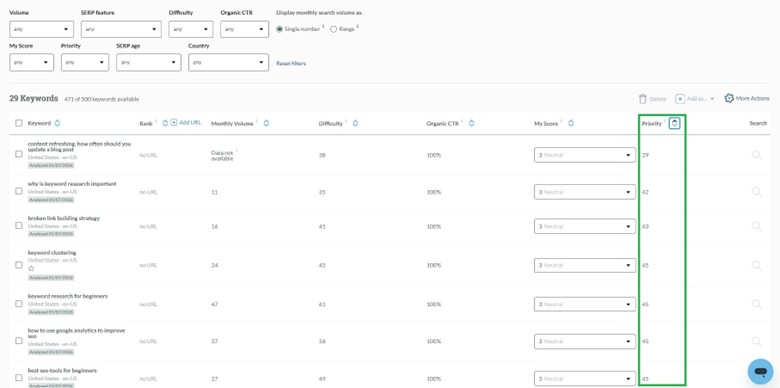
Where Moz starts to feel lacking is when SEO turns into a numbers-heavy game– lots of competitors to analyze, lots of keywords to track, and a need for deeper insights beyond just organic rankings.
As projects grow and competition intensifies, SEMrush’s all-in-one coverage becomes a major advantage. SEMrush covers SEO, PPC, social, content, and competitive intelligence in one ecosystem, making it ideal for scaled workflows.
Moz appeals to users who want to focus on core SEO tasks only without navigating dozens of tools they don’t actively use. Its lower ongoing cost also makes it a more accessible option for smaller teams and individual creators. People who swear by Moz usually aren’t judging it from a quick trial. They’ve spent real time using it, learned how its metrics behave, and built a workflow around it.
Semrush vs Moz: Verdict
Across highly competitive SERPs, SEMrush delivers a level of competitive insight that more focused platforms like Moz aren’t built for. However, for smaller teams and creators, Moz’s streamlined toolset and lower ongoing cost make it the better long-term fit. Plus, Moz’s metrics, explanations, and workflows are more instructional, whereas SEMrush assumes a higher level of SEO maturity.
5. Ubersuggest
Plans start at: $20/month (Lifetime Price: US$200)
Free Trial: 7-day free trial
At a functional level, Ubersuggest checks the same fundamental boxes many users rely on SEMrush for: keyword research with volume and difficulty, competitor keyword discovery, backlink overviews, site audits, rank tracking, and content ideas.
At $199 per month, SEMrush’s pricing can be overkill for hobbyists, solo creators, freelancers, startups, or small teams. If you don’t need PPC data, ad intelligence, or complex workflow tooling, entry-level tools like Ubersuggest deliver a large portion of SEMrush’s SEO value at a fraction of the price.
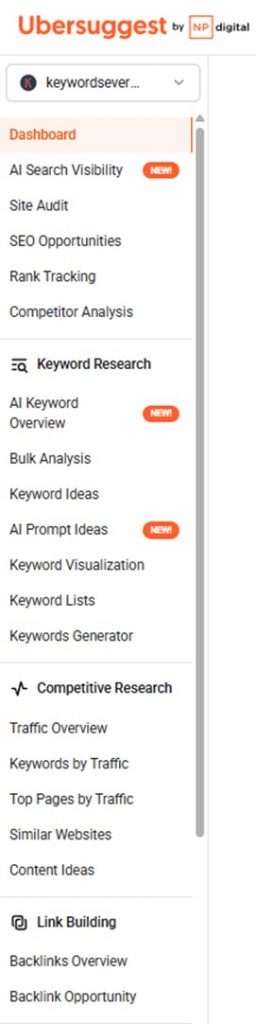
For instance, Ubersuggest lets you:
- Find competitor keywords and top pages to see exactly what’s driving organic SEO traffic for similar sites
- Check keyword difficulty and SERP competition to gauge how realistic rankings are
- Run site audits to surface crawl errors, broken links, and basic on-page issues
- Review backlink profiles with referring domains, link growth, and authority snapshots
- Track keyword rankings over time across locations and devices
- Get content ideas based on pages already performing well in the SERPs
Even if Semrush is the more expansive, enterprise-leaning platform, Ubersuggest still brings a few unique strengths to the table. To illustrate, its content research tool highlights social engagement signals from Facebook, Reddit, and Pinterest at the page level, helping creators spot ideas that are already gaining traction beyond search alone.
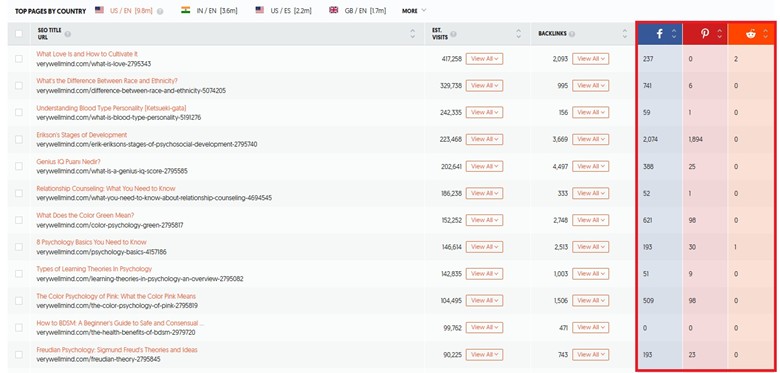
Overall, Ubersuggest covers enough ground to stand in for SEMrush for a large segment of users, and its lifetime access pricing (from about $200) sweetens the deal by cutting recurring costs entirely.
It also takes a more team-friendly approach to pricing, with multiple user seats included on most plans and additional users costing around $5 per month, compared to Semrush’s $45–$100 per extra seat.
Ubersuggest definitely has a lower barrier to entry and is one of the cheapest alternatives to SEMrush, but if your scope starts to include paid search, content ops, and cross-channel strategy, Semrush earns its higher price point. In the end, it’s a question of scale and scope.
Ubersuggest vs Semrush: Verdict
If Semrush feels like overkill, that’s because it kind of is for most people. It’s built for teams, agencies, and big campaigns. Ubersuggest is more “get the job done” SEO. One-time pricing, fewer moving parts, and no pressure to justify a monthly spend.
6. Mangools
Plans start at: $30.50/month ($18.85/month billed annually)
Free Trial: 10-day free trial (No credit card required)
For users who want clear answers without digging through dozens of reports, Mangools feels efficient and approachable. Instead of one massive dashboard, it splits SEO into five clear tools: KWFinder for keyword research, SERPChecker for SERP analysis, SERPWatcher for rank tracking, LinkMiner for backlinks, and SiteProfiler for domain metrics. That structure makes it easy to understand what each tool does and when to use it.
Mangools also emphasizes visual cues—color-coded difficulty, clean charts, SERP previews—over dense tables. This makes it easier to scan opportunities quickly, especially for solo creators, bloggers, and non-SEO specialists who don’t want to interpret metrics that are too layered.
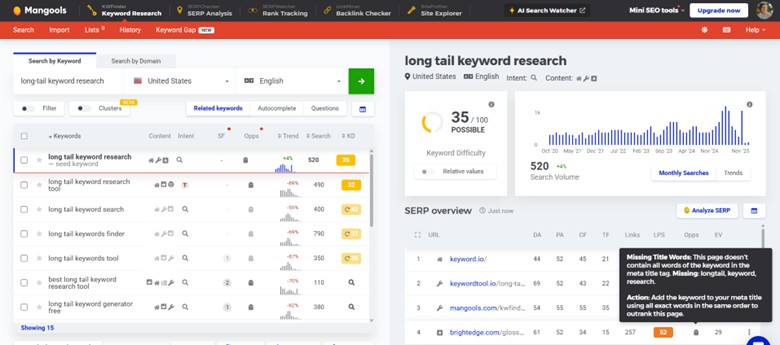
KWFinder’s difficulty score is also widely favored for finding low-competition, early-stage opportunities. It’s less aggressive than SEMrush’s KD and often better aligned with what smaller or newer sites can realistically rank for.
On top of that, Mangools is less restrictive operationally: users can track rankings for unlimited domains and schedule unlimited reports, while Semrush limits both unless you upgrade. Ultimately, Mangools fits lean workflows, while SEMrush fits growing ones. The right choice depends on how far your SEO responsibilities extend.
Mangools vs Semrush: Verdict
Mangools is SEO-only by design. It doesn’t attempt to cover paid search, advertising history, or cross-channel competition. Semrush, on the other hand, has 50+ specialized tools, including social media scheduling, content briefs, reporting dashboards, and outreach workflows. For solo users, this can feel like too much. For growing teams, it can reduce tool sprawl.
Because each platform is purpose-built, the day-to-day workflow feels very different. If you just want to make quick, confident SEO calls, Mangools is a great SEMrush alternative that avoids the extra overhead.
Final Thoughts
Semrush is not a pure SEO tool, with strong coverage across SEO, PPC, content planning, competitive research, reporting, and even social media. Just take note that as a modular marketing platform, pricing is also modular, meaning SEO, PPC, content, and competitive research are often billed as separate toolkits.
Here’s a quick snapshot of how those toolkits are priced.
- SEMrush SEO Toolkit — Starts at $139.95/month (Pro plan)
- AI Visibility Toolkit — $99/month
- Traffic & Market Toolkit — Starts at $289/month
- Local SEO Toolkit — Starts at $30/month (Base plan)
- Content Toolkit (formerly Contentshake AI) — $60/month
- Social Media Toolkit — Starts at $20/month (Base plan)
- Advertising Toolkit (PPC data) — Starts at $99/month
- SEMrush One — Starts at $199/month (bundles SEO + AI Visibility toolkits)
The general consensus is that Semrush is worth it only if you actively rely on that breadth; otherwise, it can feel like overkill.
There’s no single “best” SEO tool– only the best fit. Exploring SEMrush alternatives helps you choose platforms that align with your goals, workflow, and budget as your strategy evolves. Choose tools that work with you, and the results follow.