

You may have outgrown Ubersuggest’s beginner-friendly setup, or you might simply want tools that approach SEO a bit differently. In many cases, it’s less about upgrading and more about finding a better fit for your workflow.
Best Ubersuggest Alternatives
Ubersuggest is easy to use and affordable, but it’s not perfect for every setup. Depending on your needs, these Ubersuggest alternatives may give you more flexibility, clearer data, or features that better match how you actually do SEO.
1. Keywords Everywhere
Plans start at: $7 per month
Free Trial: Freemium model
Traditional SEO tools would often require opening the dashboard, running a keyword report, exporting or filtering data, and returning to the SERP to sanity-check. Keywords Everywhere collapses all these into one step.
All you have to do is set up our browser extension and you can see keyword metrics directly inside Google Search, Google Trends, YouTube, and 20+ other major platforms.
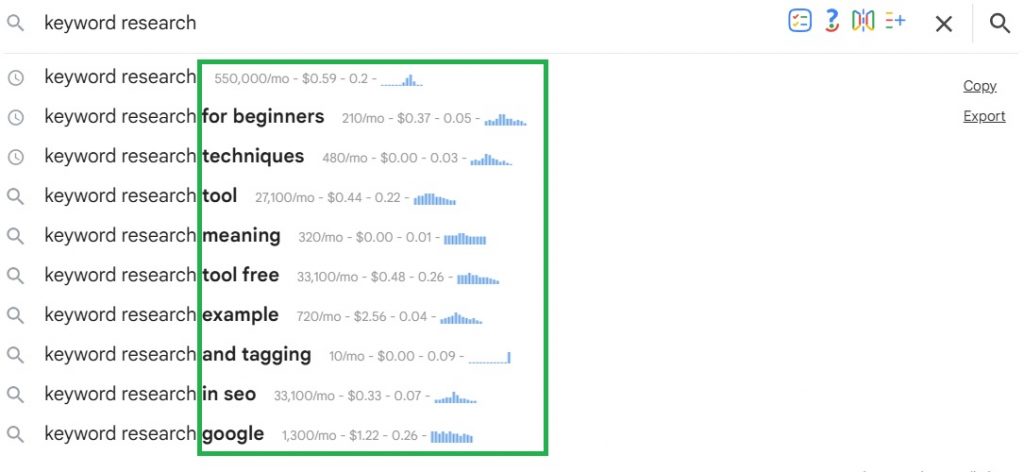
You can see search volume and other keyword data below the search box along with extra keyword grouping functionalities via Keyword Planner.



You can also view them in the autocomplete section and Copy/Export data conveniently as you browse.
There also are different widgets on the sidebar highlighting grouped keywords for quick and easy ideation.
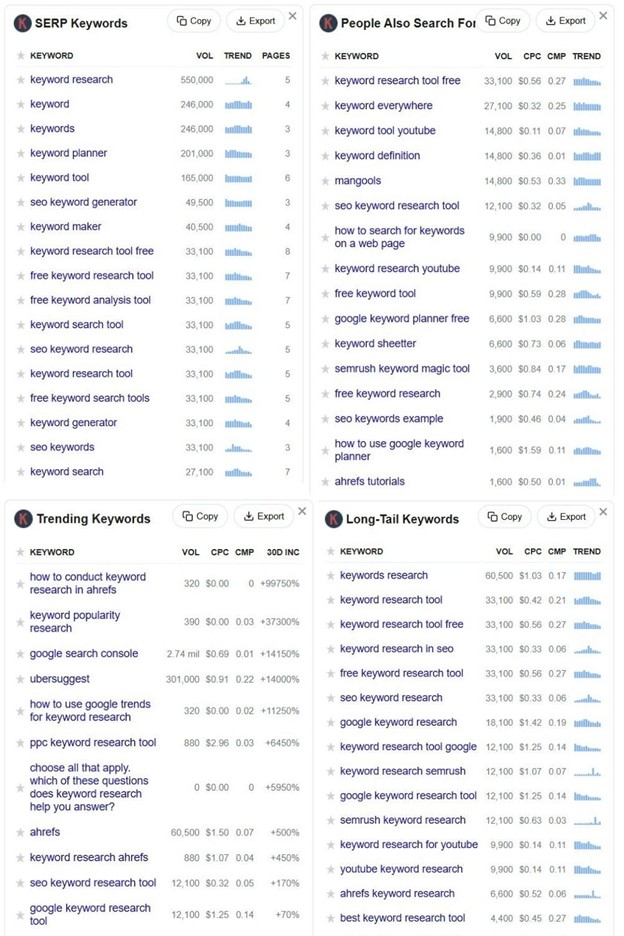
And because these features are always visible, keyword research becomes ongoing instead of episodic. It reduces workflow friction, and helps you make smarter decisions in real time rather than after the fact. Over time, that speed adds up and naturally sharpens your SEO instincts through repeated, low-effort validation.
Keywords Everywhere also goes beyond the browser extension with a growing suite of standalone SEO tools (most of which are free of charge), covering many of the same workflows you’d typically use Ubersuggest for. For example, you can use:
- Keyword Finder, Search Volume Checker, and Keyword Difficulty Checker for keyword research and validation.
- Competitor Analysis, Competitors Finder, and Keyword Gap Analysis to uncover competing sites and keywords you’re missing.
- Website Traffic Checker and Top Pages Finder to estimate organic traffic and see which pages are driving a competitor’s visibility.
- Backlinks Checker and Backlink Gap Analyzer for backlink research and link-building opportunities.
- Organic Ranking Checker, SERP Checker, and SEO Analyzer for rankings, SERP analysis, and on-page SEO checks.
So while many SEOs still use Keywords Everywhere as a complementary layer on top of their existing SEO stack, its standalone toolkit now covers a much broader chunk of the research, competitor analysis, backlink, ranking, and site-audit workflow too.
2. Semrush
Plans start at: $199/month ($165.17/month billed annually)
Free Trial: 7-day free trial
Ubersuggest is often seen as a strong entry-level tool, but SEMrush makes more sense when decision-making depends on detailed competitor intelligence and long-term tracking.
Ubersuggest offers a lightweight keyword overview that’s pretty useful for initial checks, but SEMrush breaks down the entire SERP, covering link strength, content depth, intent alignment, and SERP features to support better go/no-go decisions.
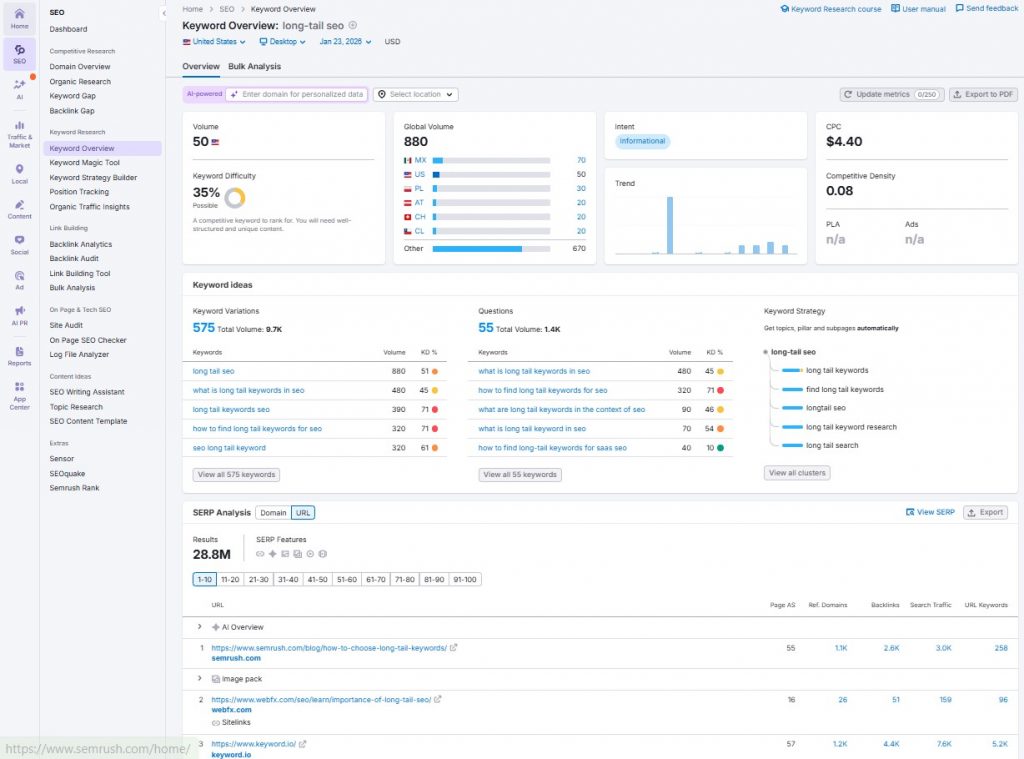
On the competitive side, Ubersuggest provides high-level visibility into competitor domains, such as estimated organic SEO traffic, top-ranking keywords, and top-performing pages. SEMrush goes much deeper, exposing true keyword and content gaps, traffic share by domain, and historical ranking changes across both organic and paid search.
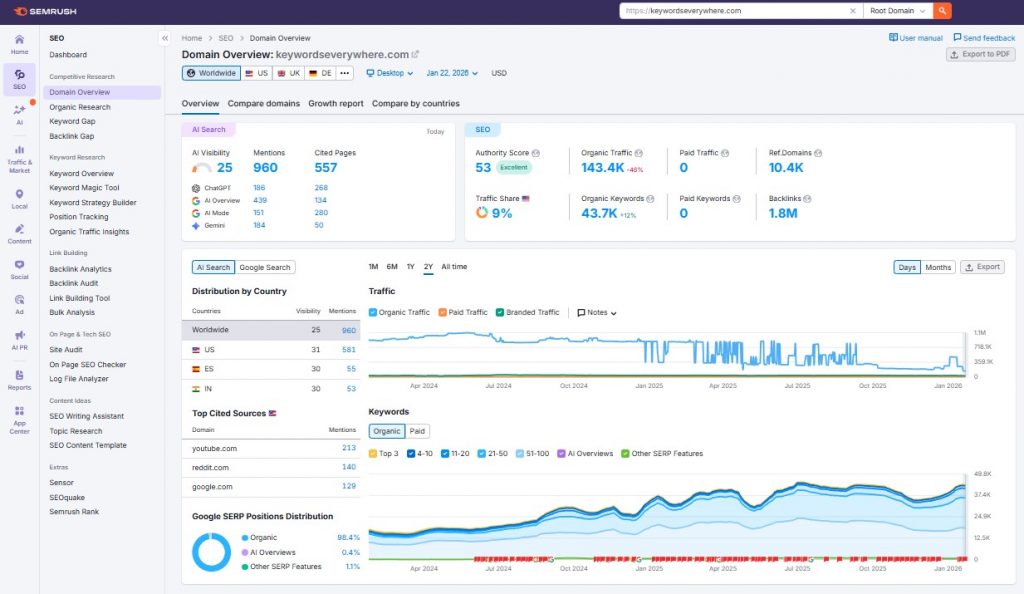
Backlink analysis is another defining feature. Ubersuggest covers backlinks at a glance, but SEMrush goes further by tracking link changes over time, categorizing link types, and flagging potentially toxic links.
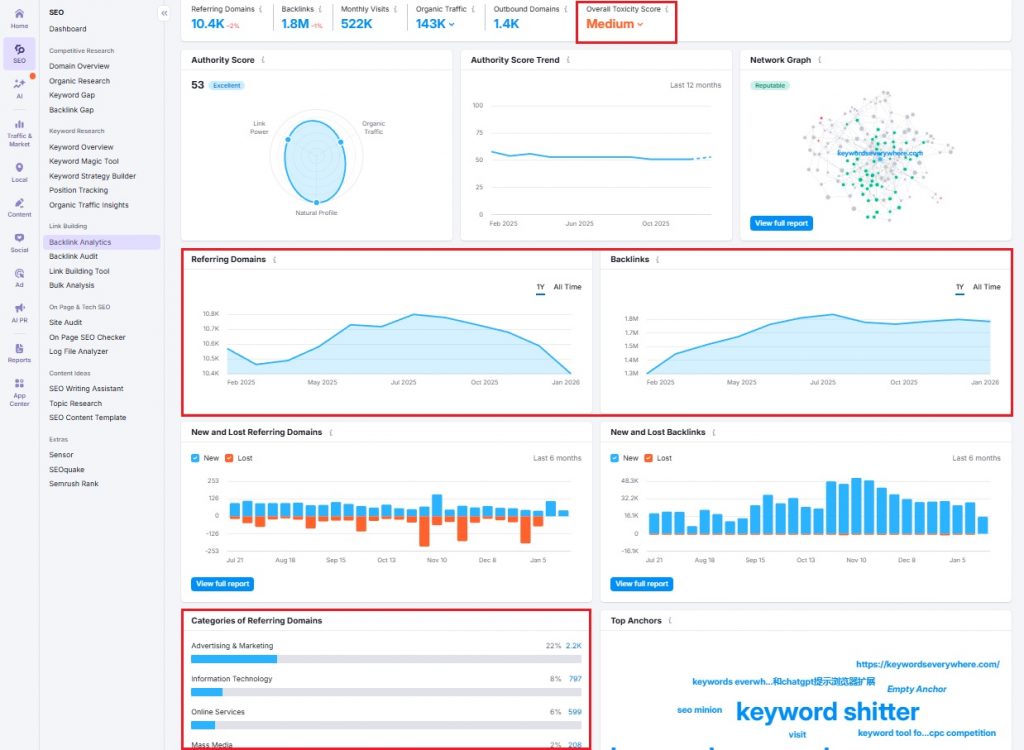
For technical SEO, Ubersuggest also runs lightweight audits, but SEMrush crawls deeper, prioritizes issues by severity, and includes Core Web Vitals and internal linking diagnostics.
Alongside advanced rank tracking and automated reporting, SEMrush’s multi-user workflows make it better suited for agencies and in-house teams executing long-term SEO strategies.
Beyond functionality, SEMrush carries industry weight. Some teams even choose it simply because it’s well known, and that recognition makes reports feel more trustworthy in client or stakeholder presentations.
Semrush vs Ubersuggest: Verdict
If you want a broader toolkit that matches more ambitious, multi-channel strategies, Semrush is usually the better alternative for agencies and in-house teams. However, Ubersuggest is easier to justify when needs are simple and budgets are tight. Overall, it’s about choosing the tool that matches your stage and scope.
3. Ahrefs
Plans start at: $129/month ($108//month billed annually)
Free Trial: No Free Trial
Ahrefs, much like Semrush, is often labeled “expensive,” especially compared to more lightweight tools like Ubersuggest. In practice, the teams that choose Ahrefs are usually in-house growth teams, SEO-led startups, agencies, and publishers. These teams can justify the cost because they’re managing competitive SERPs, multiple sites or clients, and content roadmaps where click potential, SERP stability, and backlink intelligence materially affect ROI.
For them, Ahrefs isn’t just a keyword tool. It’s a way to reduce risk, recalibrate strategy, and replace several lighter tools with one reliable source of truth.
When publishing the wrong page or targeting the wrong keyword can mean months of wasted effort, teams tend to favor tools that expose risk early. Ahref’s metrics like Clicks, SERP history, and detailed backlink profiles help explain why a keyword performs the way it does– not just that it has volume. That level of clarity is usually harder to replicate with lighter tools.
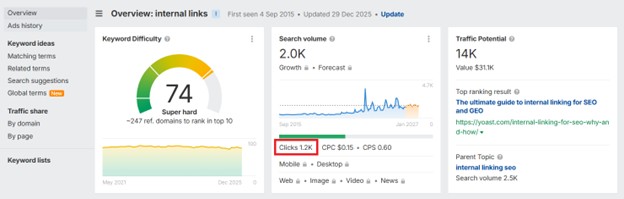
And with a keyword database spanning 19+ billion keywords across 170+ countries, it captures local variations, service-plus-modifier combinations, and emerging queries that smaller databases often miss.
On the link side, Ahrefs’ backlink index depth, link growth charts, and referring page analysis make it easier to judge how much link equity it actually takes to compete rather than guessing based on summary scores.
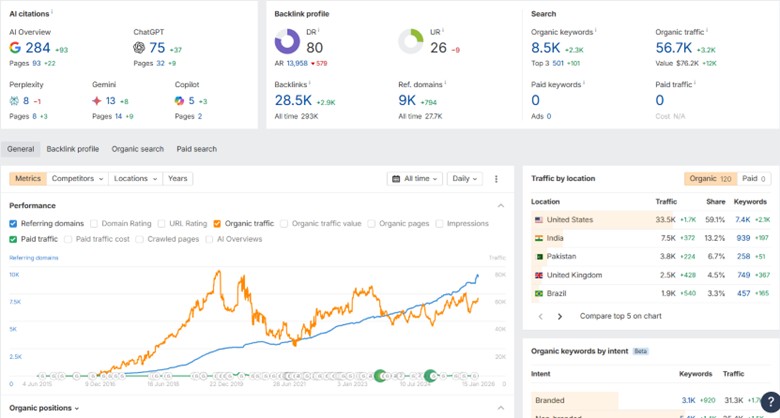
Even on the technical front, Ahrefs goes deeper than Ubersuggest. Its Site Audit flags over 140 issue types, including JavaScript rendering problems, redirect chains, and crawl inefficiencies, making it a stronger fit for teams operating in complex, high-stakes environments.
Ubersuggest vs Ahrefs: Verdict
Ahrefs is rarely the first SEO tool teams try, but it’s one they consider settling on once stakes rise. While Ubersuggest can be enough as a lightweight starting point for newcomers and smaller budgets, Ahrefs is a higher-investment tool that scales with advanced needs. If precision, historical context, and reliable benchmarks can directly impact your revenue and long-term strategy, Ahrefs tends to be the stronger alternative.
4. SE Ranking
Plans start at: $65/month ($52/month billed annually)
Free Trial:14-day free trial (No credit card required)
While Ubersuggest is simple and easy-to-use, typically recommended for beginners and small websites, SE Ranking is a mid-tier option between very lightweight tools and enterprise platforms like Ahrefs/Semrush.
Ubersuggest does cover the essentials well but doesn’t go as far into analytics and operational workflows. For instance, Ubersuggest lacks deeper technical site audits, page change monitoring, scalable keyword grouping, and agency-oriented features like white-label reporting and client access, which limits its practicality for larger sites or multi-client work.
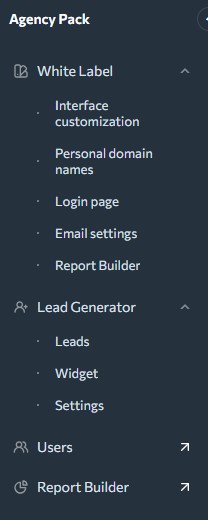
SE Ranking is considered a more robust, agency-grade alternative to Ubersuggest. It even has the Agency Pack that includes White Label tools to brand reports as your own and Lead Generator that embeds an audit widget on your site to capture visitor emails in exchange for SEO reports.
Like other all-in-one SEO tools, Ubersuggest also performs Site Audit, which covers on-page and technical optimization. However, SE Ranking has a specialized tool dedicated for on-page audit, and many users are loving how intuitive and actionable that module is.
Every on-page optimization task is listed in order of urgency, and you can expand each to get the full details on how to execute each task.
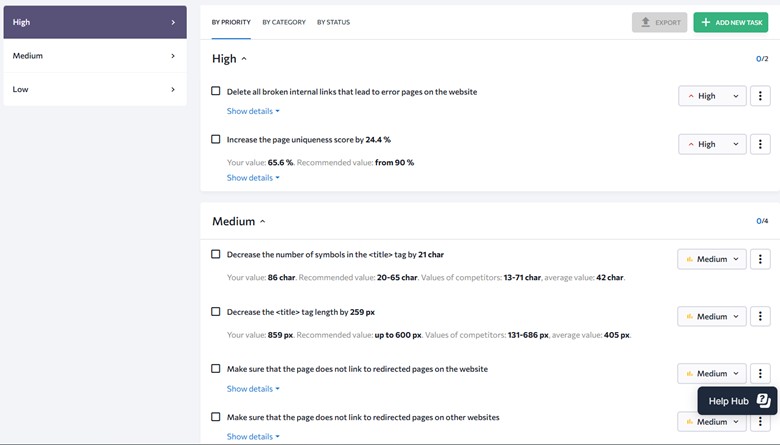
Ubersuggest also sorts SEO issues nicely and provides adequate guidance while indicating both task difficulty and SEO impact, but SE Ranking’s checklist layout and overall step-by-presentation just makes it seem clearer and easier to follow.
Even their Local Marketing tool is purpose-built for thorough audits and actionable, step-by-step guidance:
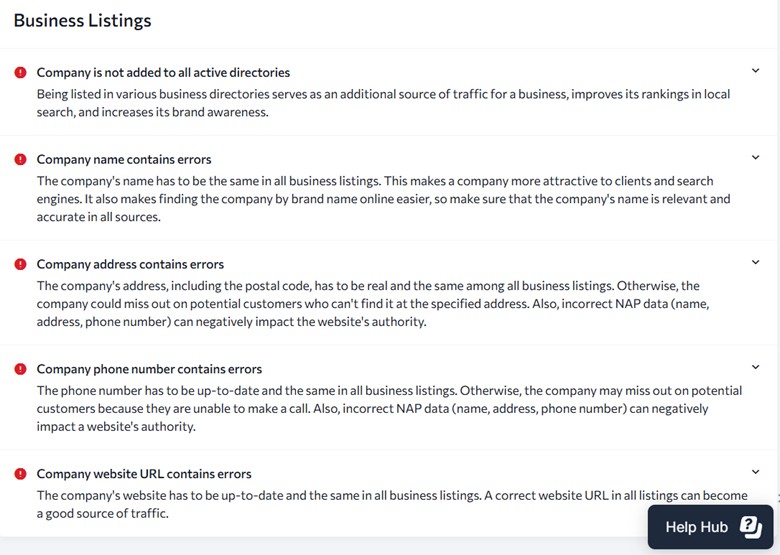
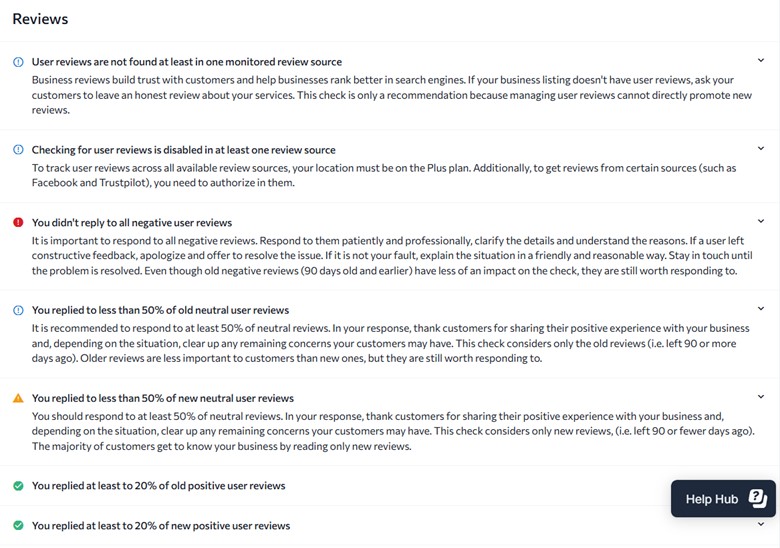
And if you’re managing a multi-person team, SE Ranking even has a feature that alerts you whenever changes are made to certain page/s. This helps you stay on top of optimization maintenance and SEO issues. And it doesn’t just help track internal-driven changes. You can use it to monitor your competitors’ pages as well to fine-tune your own optimization strategy based on real-time updates.
Ubersuggest vs SE Ranking: Verdict
If you’re working on a smaller project and need something simpler and easier to pick up, Ubersuggest is definitely a practical starting point. But if you’re looking for a more professional, all-around alternative, SE Ranking is a stronger option. It gives you something more to work with, even instant Keyword Grouper and Social Media Analytics & Scheduler. Overall, both tools are effective, but SE Ranking better supports teams, agencies, and growing SEO demands.
5. Serpstat
Plans start at: $69/month ($50/month billed annually)
Free Trial: 7-day free trial
While Ubersuggest is great for quick ideas, Serpstat digs into the actual search results, showing which pages rank, how strong those competitors are, and how crowded the SERP really is.
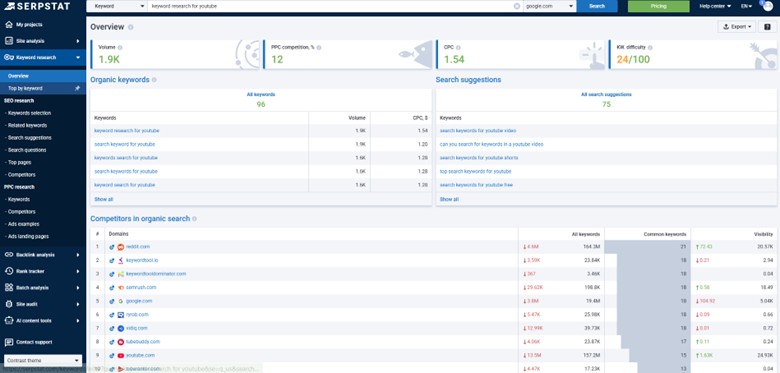
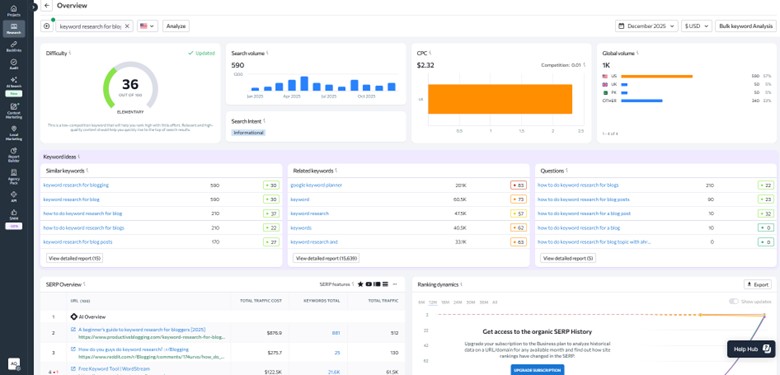
Ubersuggest’s competitor context is generally much lighter while Serpstat offers more granular competitive tools like keyword intersection, missing keywords, and competitor overlap analysis. This lets you see precisely where competitors outrank you and which keywords you’re not showing up for yet., rather than just listing “top competitors.”
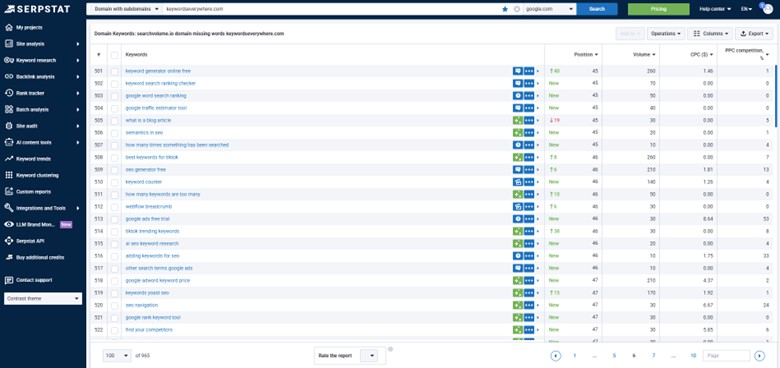
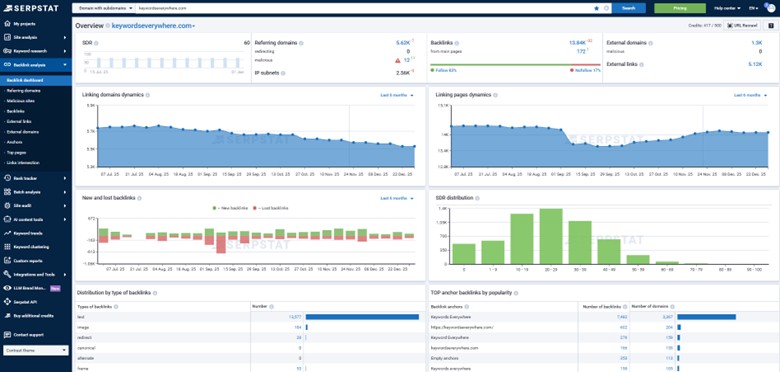
Serpstat’s backlink tools also go deeper, with anchor-text distribution, link growth history, and referring-page analysis, whereas Ubersuggest’s backlink data is more summary-level.
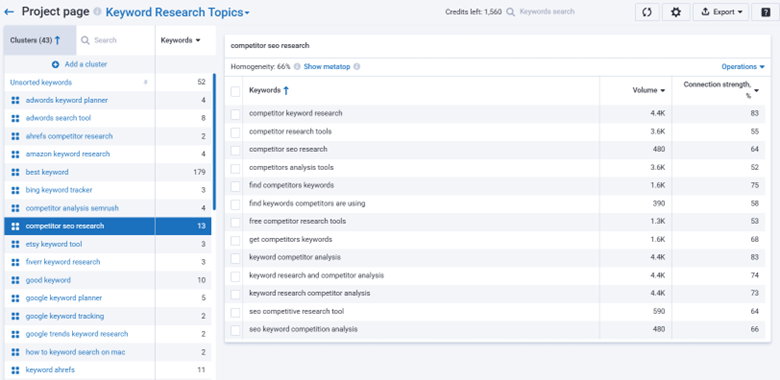
Another standout tool is Serpstat’s keyword clustering option. With this feature, large keyword lists become much easier to work with. Instead of manually sorting thousands of terms, the tool automatically organizes them into meaningful clusters, showing which keywords naturally belong together. This helps content teams plan pages more efficiently and focus on topical coverage rather than chasing individual keywords.
Overall, from a technical and operational standpoint, Serpstat is designed for serious SEO workflows. It supports high-volume batch analysis, flexible site audits with custom crawl settings, and JavaScript crawling for complex websites. Agencies also benefit from built-in white-label reporting, structured team access, and a public API, which allows SEO data to flow directly into internal dashboards or client-facing tools.
Ubersuggest vs Serpstat: Verdict
For users who’ve outgrown beginner-friendly tools, Serpstat can offer more depth and control. Serpstat shows who ranks, how competitive the SERPs are, and what gaps exist, making it easier to build an SEO roadmap for larger marketing campaigns.
6. Moz Pro
Plans start at: $49/month ($39/month billed annually)
Free Trial: 7-Day Free Trial
Ubersuggest is built to be approachable and affordable, making it a solid option for early-stage SEO and quick keyword ideas. Moz, on the other hand, is designed to support SEO as an ongoing process, with tools that prioritize accuracy, context, and structured optimization.
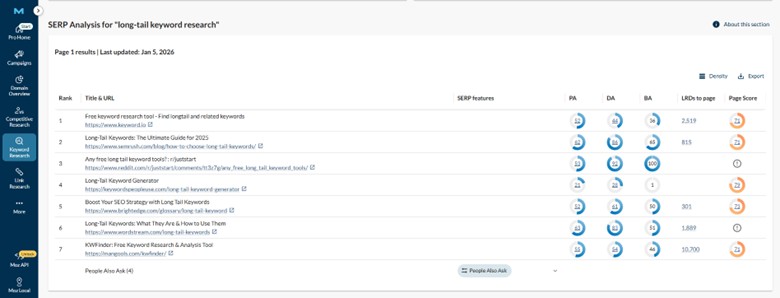
Moz’s keyword research goes beyond basic volume and difficulty by incorporating organic CTR estimates, SERP analysis, and priority scoring in one view, whereas Ubersuggest largely stops at volume and a simplified difficulty score. The extra SERP-driven context helps avoid keywords that look attractive but are dominated by ads, SERP features, or entrenched competitors.
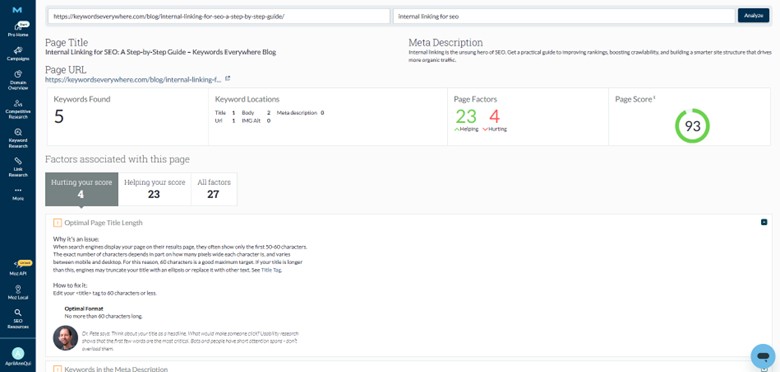
Moz also offers dedicated on-page analysis through its On-Page Grader, scoring individual pages and providing concrete optimization recommendations, something Ubersuggest doesn’t provide at the same depth. It does cover lightweight site audit and spots broader site-wide issues, but doesn’t walk you through fixing them page by page.
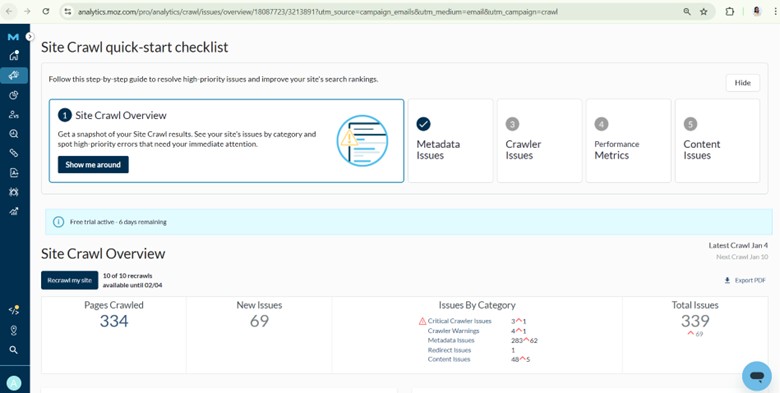
On the technical side, Moz’s site audit is built for ongoing monitoring, with clearer issue categorization and tracking over time, while Ubersuggest’s audit is rather more lightweight and snapshot-based.
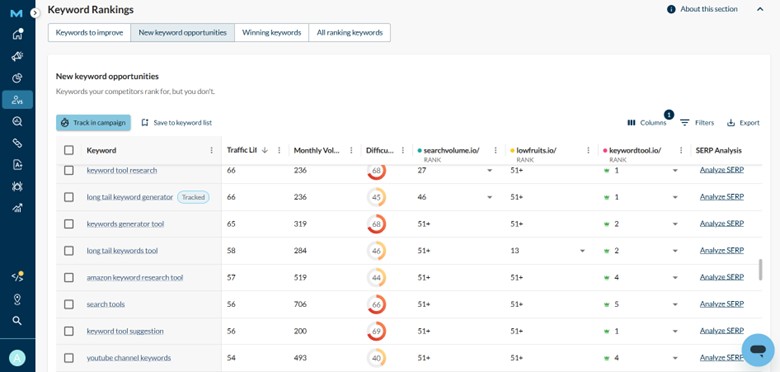
Competitive analysis is another area where Moz pulls ahead. Moz’s Keyword Gap Analysis highlights where competitors outrank you, what you’re missing, and which keywords are close to becoming wins, whereas Ubersuggest tends to list competitors without clearly prioritizing gaps or near-term opportunities.
The classic MozBar also adds day-to-day convenience by showing authority and spam signals directly in the SERPs, reducing the need to jump back into dashboards for quick checks.
Ubersuggest vs Moz Pro: Verdict
Ubersuggest works well for beginners, solo creators, and budget-conscious users who want quick insights and content ideas. It’s also a pretty decent and accessible all-in-one tool. But more methodical alternatives like Moz just fit better when SEO becomes more process-driven, requires greater accuracy, and needs to scale across teams or multiple projects. Overall, the choice largely comes down to your SEO goals and scale.
7. Mangools
Plans start at: $30.50/month ($18.85/month billed annually)
Free Trial: 10-day free trial (No credit card required)
Both Mangools and Ubersuggest are generally considered less intimidating than enterprise platforms. They both have a more lightweight interface, minimal learning curve, and accessible pricing.
In terms of keyword research, both are strong options as well. However, many users find Mangool’s KWFinder to be a bit more SERP-aware, making it easy to find keywords that are actually doable. These tools calculate keyword difficulty a bit differently. Ubersuggest uses a broader, blended model that looks at overall competitiveness signals such as domain authority and backlink data. Mangools, on the other hand, places greater emphasis on page-level SERP analysis. This makes Mangools particularly stronger for realistic keyword targeting.
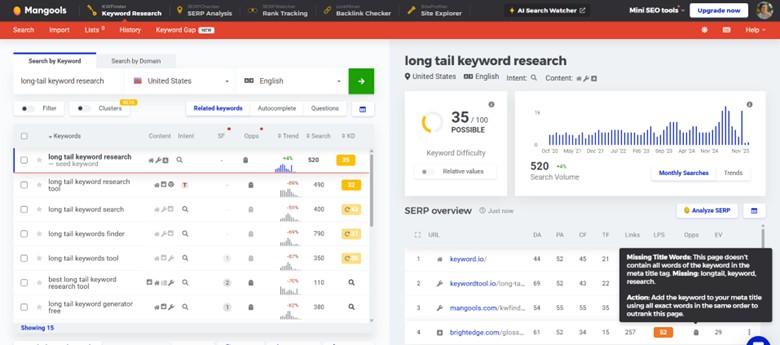
In terms of interface, both platforms have intentional, approachable, and beginner-friendly navigation. However, Mangools presents important SEO metrics (volume, difficulty, SERP authority) in one place, so you don’t need to jump between different reports. Ubersuggest, on the other hand, leans more heavily on charts and visual summaries to present data at a high level, something that works especially well for beginners and non-technical users.
Ubersuggest vs Mangools: Verdict
Mangools has a pretty solid and affordable pricing relative to its features. Bloggers, freelancers, and small businesses who want professional-grade tools can get real SEO work done without paying enterprise prices. Both Mangools and Ubersuggest are great for beginners and offer excellent value. The best decision just depends on your particular SEO goals and workflow preferences.
Conclusion
No SEO tool is perfect on its own. Ubersuggest alternatives give you options to fill the gaps, whether that means better keyword data, stronger competitive insights, or just more efficient workflows. Ultimately, success comes from building a toolkit that supports how you actually work.